Radon is often described as a problem for Colorado, Minnesota, or the northern plains states. Georgia tends not to come up in that conversation. That assumption is worth reconsidering. North Georgia sits on crystalline rock geology that produces elevated radon in the surrounding soil and, by extension, in homes built on top of it. Counties like Cherokee, Cobb, Bartow, Floyd, and Paulding are among the highest radon-risk areas in the Southeast. This is not speculation or regional fear-mongering. It is what state and federal screening data consistently shows. If you own a home in North or Metro Atlanta and have not tested for radon, this is the information you need.
What the EPA Radon Zone Map Shows for Georgia
The EPA Radon Zone Map divides every county in the United States into one of three risk categories based on geology, soil type, and historical indoor radon screening data.
Zone 1 is the highest-risk category. The EPA predicts that the average indoor radon screening level in these counties will exceed 4.0 pCi/L. That 4.0 pCi/L threshold is the EPA action level, the point at which the agency recommends mitigation. Cherokee, Bartow, and Floyd counties are all confirmed Zone 1.
Zone 2 carries moderate risk. The EPA predicts average indoor screening levels between 2.0 and 4.0 pCi/L. A large portion of North and Metro Atlanta falls here, including Fulton, Gwinnett, DeKalb, Forsyth, and Hall counties. Paulding and Cobb counties carry elevated risk that puts them in similar territory.
Zone 3 represents the lowest predicted risk, with average levels below 2.0 pCi/L. This category covers primarily coastal Georgia and the southern part of the state.
There is one critical caveat that every Georgia homeowner needs to understand before reading too much into the zone map. The EPA zone map shows predicted averages based on geology and historical screening data. It is not a room-by-room prediction. Two homes on the same street, in the same zone, can have completely different radon levels. Zone 1 does not mean every home in a county will test above 4.0 pCi/L. It means the risk is elevated enough that testing is important. Geology sets the regional baseline. Your specific foundation, soil conditions, and home construction determine what actually enters your house.
The map is a starting point. It is not an answer.
Why North Georgia Has Elevated Radon Risk
Radon is a naturally occurring radioactive gas. It comes from the decay of uranium, which is present in varying concentrations in certain types of rock and soil. When uranium decays, it produces radium. When radium decays, it produces radon gas. That gas moves upward through rock fractures and soil pores, eventually reaching the surface and entering homes through foundation cracks, slab penetrations, crawlspace openings, and foundation joints.
The Blue Ridge Mountains and surrounding foothills are composed primarily of crystalline rock: granite, gneiss, schist, and similar formations. These rock types tend to carry higher concentrations of uranium than sedimentary rock formations found elsewhere in the state. That elevated uranium content means more radon is produced in the soil above and around those formations, which in turn means more radon pressure pushing up against the foundations of homes built in those areas.
This is why Cherokee, Bartow, Floyd, Paulding, and Cobb counties consistently produce elevated radon readings. The geology running beneath them is the same geology that produces elevated risk in parts of the Carolinas, Tennessee, and the mid-Atlantic states. Geologists sometimes refer to this as the Appalachian radon belt, a stretch of crystalline rock geology that runs along the eastern spine of the country and correlates with elevated indoor radon levels wherever homes are built on it.
Stone Mountain in DeKalb County is one of the most visible examples of this underlying geology. It is one of the largest exposed granite formations in the world. The granite visible at the surface there is the same category of rock that runs beneath much of North and Metro Atlanta, largely underground and out of sight.
None of this means that every home near granite or gneiss will test elevated. The relationship between geology and indoor radon is about increased likelihood, not certainty. Two properties a quarter mile apart can produce very different results depending on local soil conditions, foundation type, and construction details. What the geology tells you is that the source material for radon is present in abundance under North Georgia. That is a meaningful risk signal worth taking seriously.

Does Home Age or Construction Type Affect Radon in Georgia?
Two assumptions come up frequently when Georgia homeowners think about radon and construction. The first is that older homes are more likely to have elevated radon because they are in worse shape. The second is that new homes are safe because they were built to modern standards. Both assumptions are incomplete.
Older homes do often have more potential radon entry points. Foundation settling over decades creates cracks that did not exist when the home was built. Older slab construction frequently lacks the vapor barriers that are standard in newer builds. Crawlspaces in older homes are often unencapsulated. All of these factors can increase radon entry. But the underlying geology does not change. A well-maintained older home on low-uranium soil may test lower than a well-maintained older home sitting on granite-rich substrate. Construction condition matters, but geology matters more.
New construction presents a different version of the same problem. Concrete slabs and expansion joints exist in every new home. Radon enters through those joints just as it enters through cracks in older slabs. The soil beneath a new foundation has the same composition it had before the home was built. In Zone 1 counties like Cherokee, Bartow, and Floyd, new construction without radon-resistant features may still test elevated. Radon-resistant new construction (RRNC) features, including sub-slab depressurization rough-ins and passive vent stacks, do reduce radon entry. They do not eliminate the risk, and homes built with those features still need to be tested after construction is complete.
Foundation type affects where radon concentrates. Basements typically show the highest radon levels because they sit closest to the soil. Slab-on-grade homes allow radon to enter through the slab itself and accumulate in ground-floor living areas. Crawlspace homes allow radon to enter the crawlspace and migrate upward into the living space above. Crawlspace encapsulation affects this migration but does not eliminate radon entry entirely. The takeaway is the same regardless of foundation type: the only way to know what is in your home is to test it.
Georgia’s Highest-Risk Counties: What SafeAir’s Service Area Covers
SafeAir’s 57-city service area was built around the Georgia communities that carry the highest radon risk. Here is how that breaks down by EPA zone designation.
Zone 1 (Highest risk):
Elevated zone (still worth testing):
- Cobb County (Marietta, Smyrna, Kennesaw, Powder Springs)
- Fulton County (Atlanta, Alpharetta, Roswell, Sandy Springs)
- Gwinnett County (Lawrenceville, Duluth, Suwanee, Buford)
- DeKalb County (Decatur, Tucker, Chamblee, Brookhaven)
- Forsyth County (Cumming)
- Hall County (Gainesville)
If you live in any of these counties, your home is worth testing. That statement applies regardless of home age, foundation style, or what your neighbors have done. The county-level risk profile is a regional signal. Your home’s actual radon level is a property-specific measurement. Those are two different things, and only one of them tells you what is in your air.
For a deeper look at elevated risk in specific counties, see the posts on Cherokee County radon testing, Cobb County radon testing, and high-risk counties in North Georgia. A full list of communities SafeAir serves is available on the service areas hub.
How to Know Your Home’s Actual Radon Level
The EPA zone map tells you the regional risk profile for your county. It does not tell you what is under your specific foundation.
Two homes on the same street, in the same EPA zone, built the same year by the same builder, can have dramatically different radon levels. Soil variability, minor differences in slab construction, HVAC configuration, and even the orientation of the home can all influence how much radon enters and where it concentrates.
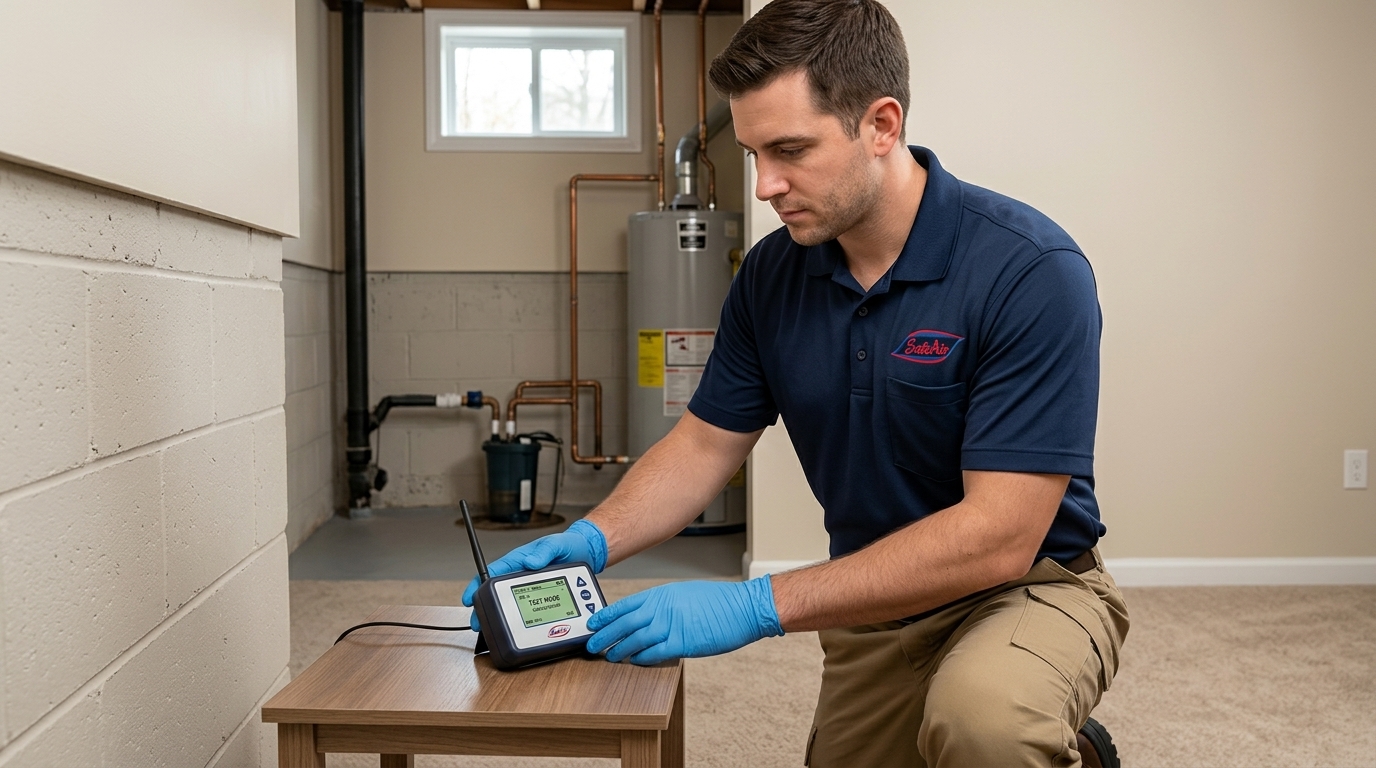
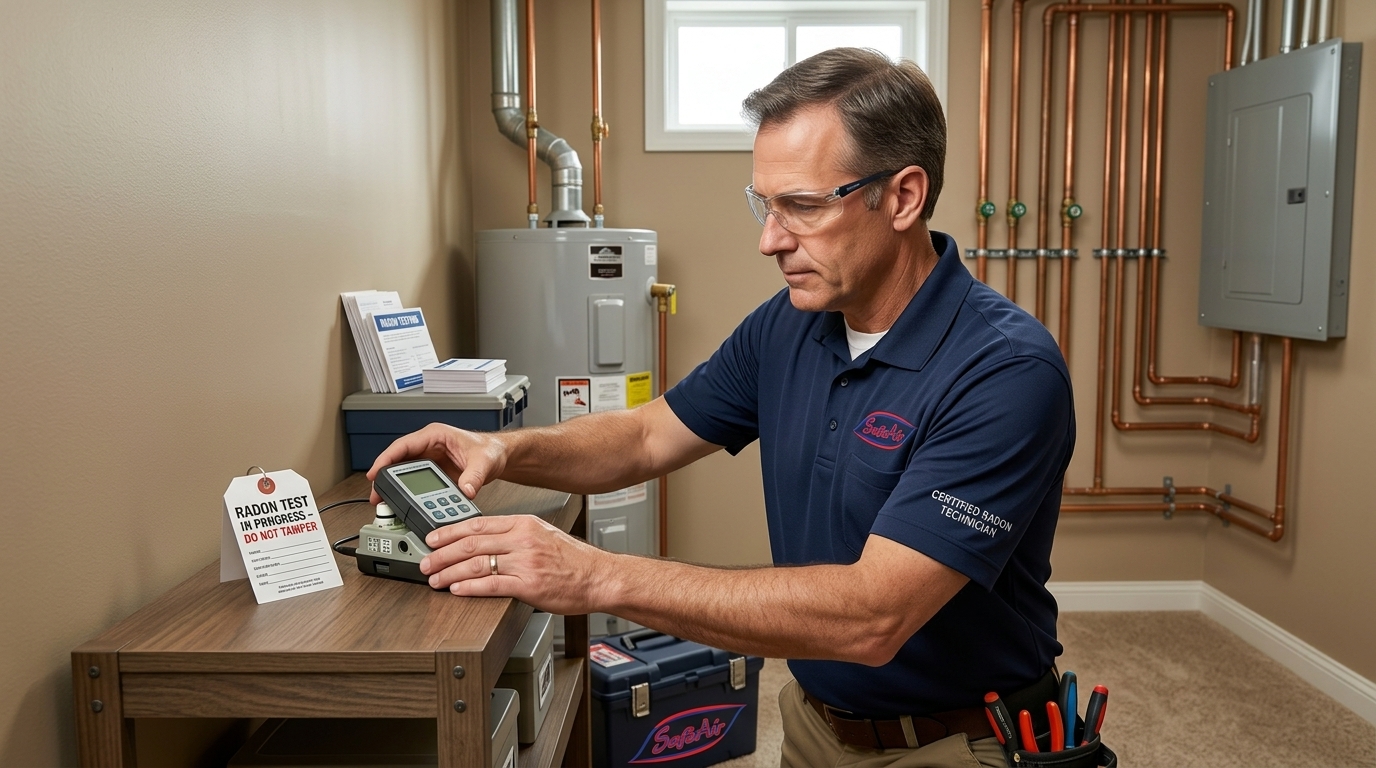
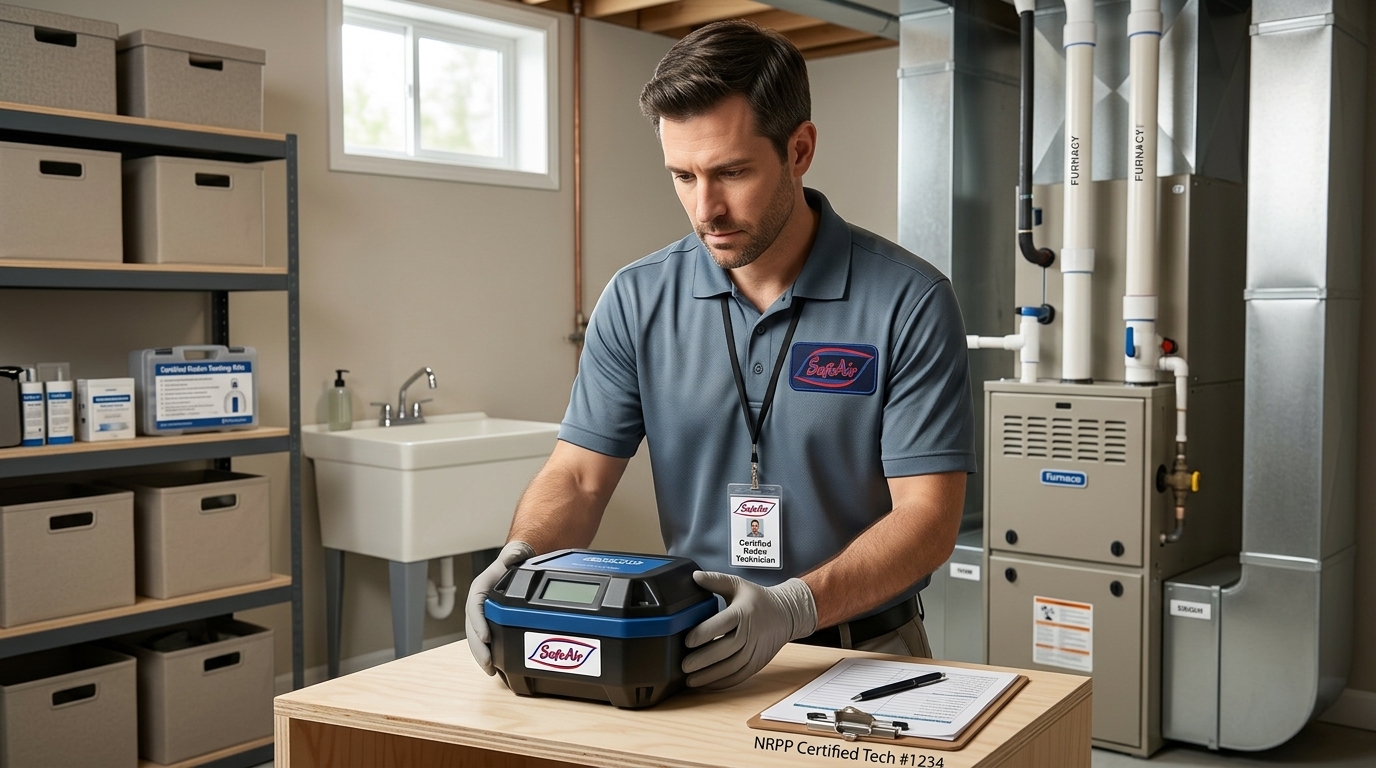
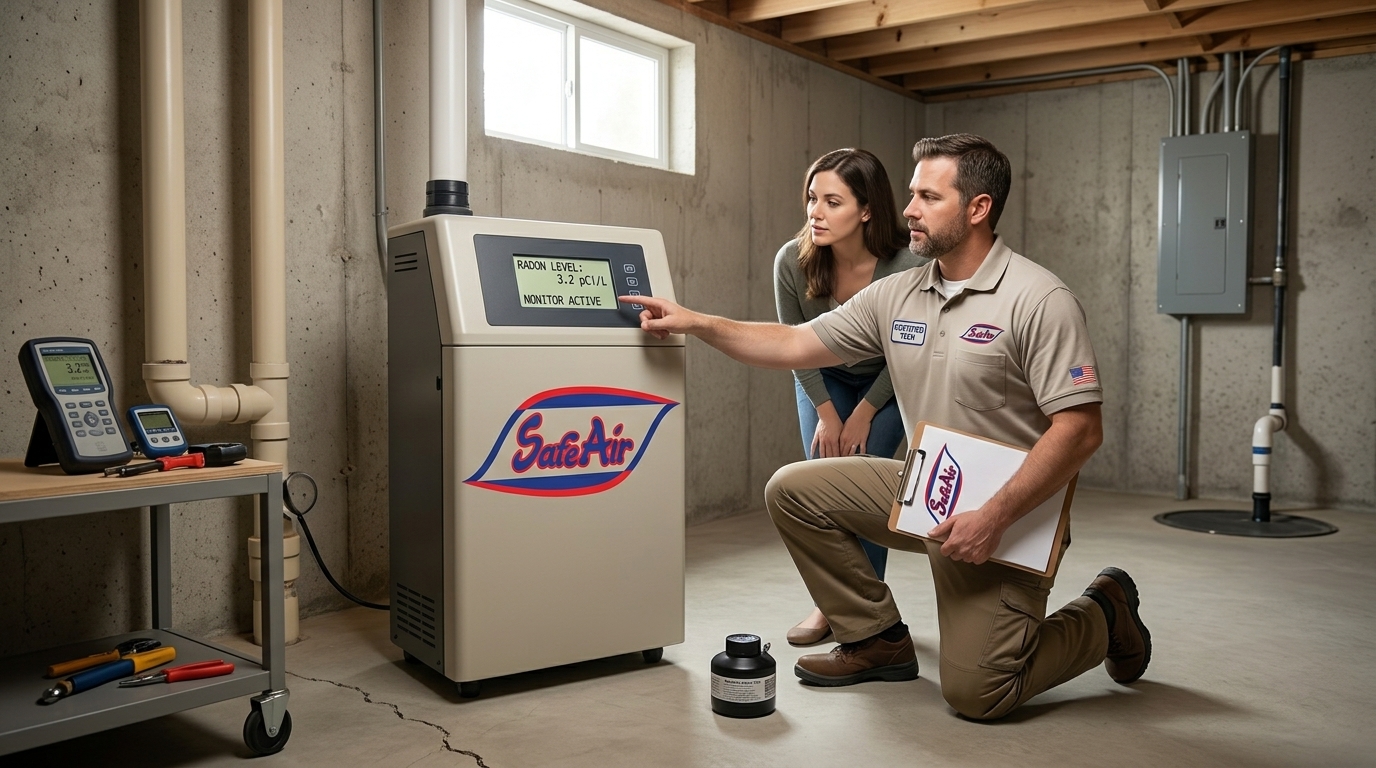
A certified 48-hour radon test gives you a specific number for your specific home. The device is placed at the lowest livable level, where radon concentrations are typically highest. After 48 hours, the device is sent to a laboratory and you receive a result expressed in pCi/L.
If the result is below 4.0 pCi/L, you know your home is within the EPA’s acceptable range. If it is above 4.0 pCi/L, you know that too, and you have the information you need to act. Either outcome is better than the alternative.
Knowing is not the scary part. Not knowing is what creates the problem.
Frequently Asked Questions
Does Georgia require radon testing for home sales?
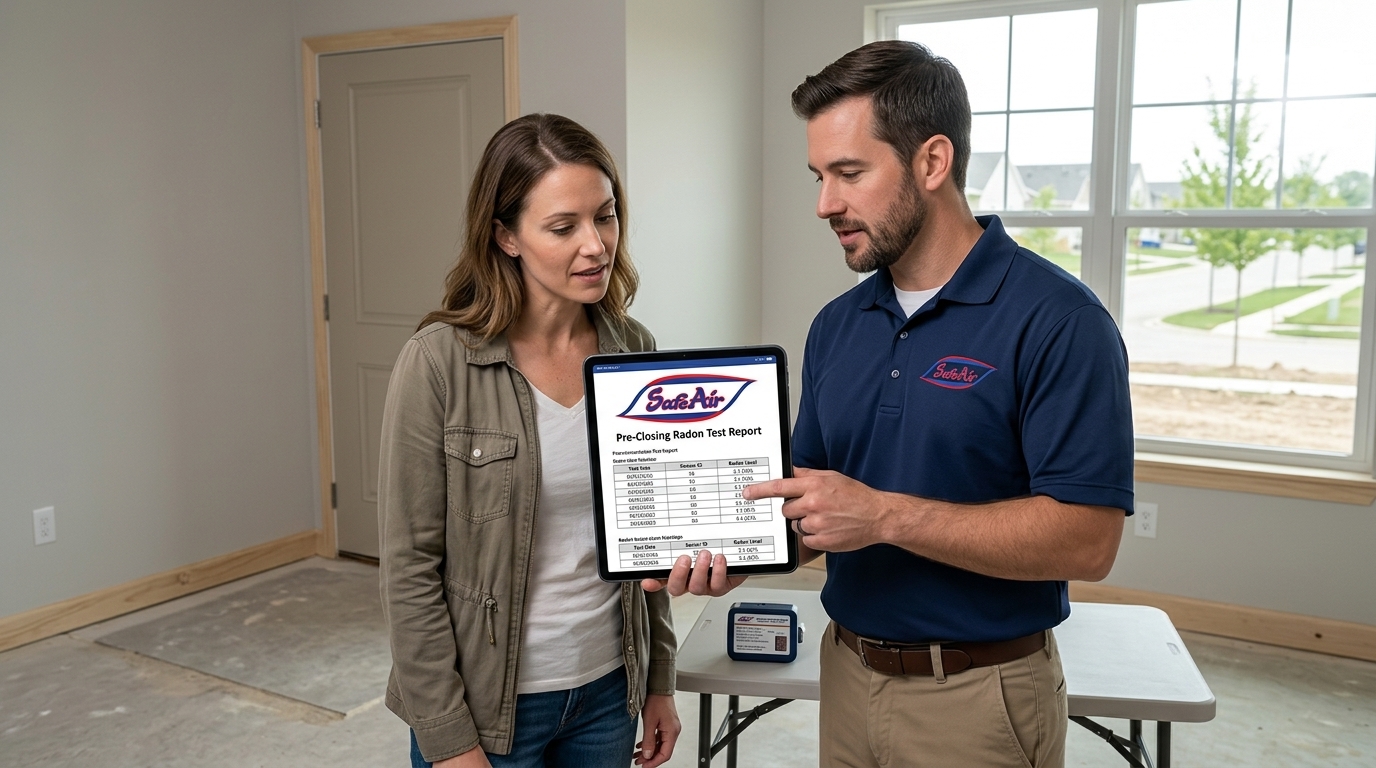
Georgia does not currently have a state law requiring radon testing before a home sale. Buyers in North Georgia counties are increasingly requesting radon testing as a contract contingency, particularly in Zone 1 counties where the regional risk is documented. A certified test before closing protects both the buyer and the seller by producing a documented result from a neutral third party. The Georgia EPD radon program is the state resource for certified testing and mitigation professionals.
What is the average radon level in Georgia homes?
Georgia’s average indoor radon level varies significantly by county and region. North Georgia counties in elevated zones have higher predicted averages than South Georgia counties in Zone 2 and Zone 3. State-level screening data is available through the Georgia Department of Natural Resources. Quoting a single statewide average obscures the county-level variation that matters most to homeowners in Cherokee, Bartow, Floyd, and surrounding areas. The most accurate way to know your home’s radon level is a certified test at your specific property.
Is radon more common in basements?
Radon concentrations are typically highest at the lowest level of a home. In homes with basements, that means the basement level is where the highest readings usually occur. Radon enters from the soil and rock beneath the foundation and concentrates near the entry point before moving upward through the home. A certified radon test places the measurement device at the lowest livable level to capture the highest-concentration point. This is standard testing protocol regardless of foundation type.
Can I use my neighbor’s radon test result for my own home?
No. Radon levels are specific to each individual property. Levels can vary dramatically between homes on the same street. Soil conditions, foundation type, construction details, HVAC configuration, and the orientation of the home can all affect how much radon enters and where it accumulates. Your neighbor’s result tells you nothing about what is under your foundation. It is useful context at most. A certified test on your specific home is the only result that applies to your family.
Know What’s Under Your Foundation.
Jeremy Shelton has been testing Georgia homes since 2009. SafeAir serves 57 communities across metro Atlanta and North Georgia, with the highest concentration of service in Zone 1 and elevated-zone counties where the need is greatest.
Same-day scheduling is available. Results are delivered within 48 to 72 hours.
SafeAir does not offer radon mitigation services. There is no conflict of interest in the result you receive. No pressure, no upsell. Just a certified measurement and the fact of what is in your home’s air.
Schedule Your Inspection
Jeremy Shelton is a certified indoor air quality professional holding the ACAC CIEC (Council-certified Indoor Environmental Consultant), ACAC CMC (Council-certified Microbial Consultant), and IICRC credentials. SafeAir Radon Testing serves Cherokee, Cobb, Bartow, Floyd, Paulding, Fulton, Gwinnett, DeKalb, Forsyth, Hall, and surrounding counties across North and Metro Atlanta, Georgia.