
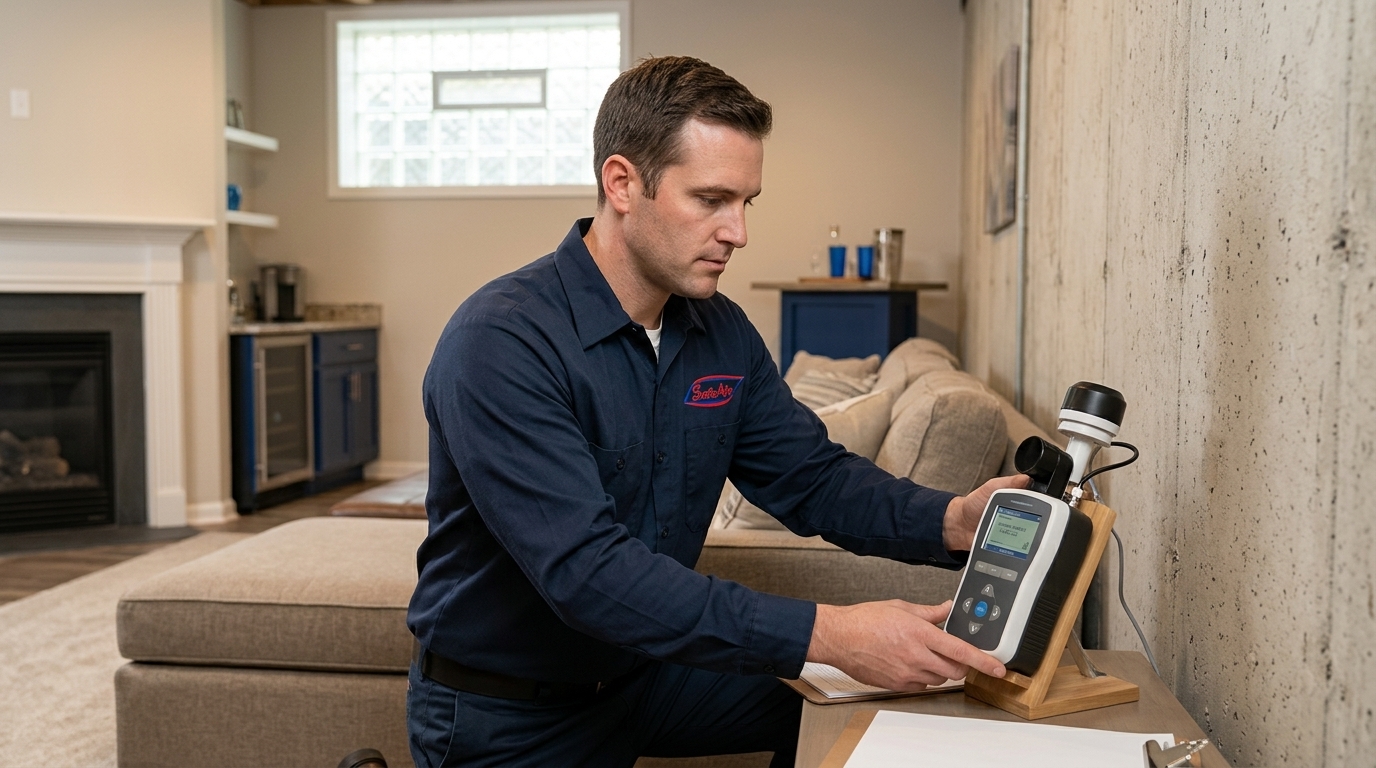
Cobb County’s Radon Risk
Cobb County’s elevated radon risk connects to its geology. The county sits at the edge of the Blue Ridge geological zone, with crystalline rock formations beneath portions of the county. The EPA classifies Cobb County as an elevated radon zone (Zone 2), making it one of Georgia’s higher-risk counties outside the Zone 1 belt to the northwest in Cherokee, Bartow, and Floyd counties. You can view Cobb County’s classification on the EPA Radon Zone Map.
In practical terms, Cobb County homes carry a statistically elevated risk compared to South Georgia counties. That said, radon levels are home-specific. The county designation does not predict any individual home’s reading.
The Kennesaw Mountain area is worth noting specifically. Kennesaw Mountain is composed of granite and metamorphic rock that contributes to elevated radon potential in surrounding neighborhoods. Cobb County’s housing stock spans from 1960s West Cobb ranches, with older foundations and more potential entry points, to 2020s East Cobb new construction, where newer slab construction still sits on elevated-zone geology.
For broader context on radon risk across the state, see our guide to radon in Georgia homes.
What Cobb County’s Housing Types Mean for Radon Risk
Radon entry points and concentration levels vary by foundation type, age, and how a home sits on its lot. Cobb County’s housing stock is diverse, and that matters when thinking about testing.
West Cobb (Powder Springs, Austell, older Marietta neighborhoods)
West Cobb is home to a large inventory of ranch and split-level homes built between the 1970s and 1990s. These homes tend to feature older slab-on-grade and crawlspace construction. Foundation settling over decades creates gaps and cracks that serve as radon entry points. Many of these homes have never been tested.
East Cobb (newer Marietta, East Cobb subdivision corridors)
East Cobb has a mix of 1980s to 2000s two-story homes and more recent new construction. Finished basements are common in this area. Radon concentrations tend to be highest in finished basement spaces, where radon entry is greatest and the space is farthest from natural ventilation. East Cobb is also one of Cobb County’s most active real estate corridors, and radon testing has become an increasingly standard contingency in transactions there.
Smyrna and the I-285 / I-75 corridor
Smyrna is one of Cobb County’s most active real estate markets. The housing mix includes in-fill construction on older lots and renovated bungalows from earlier decades. Buyers in this area routinely request certified radon tests. The combination of older lot soil conditions and high transaction volume makes testing a practical step.
Kennesaw
Older neighborhoods adjacent to Kennesaw Mountain sit closest to the granite geology that contributes to elevated radon potential in the area. Kennesaw is an active market for first-time buyers and move-up buyers, many of whom are purchasing their first home in an elevated-zone county without knowing it.
Acworth (shared with Cherokee County)
Acworth sits at the boundary between Cobb and Cherokee counties. Both county designations apply to this area. Cherokee County carries a Zone 1 designation, which places it in the highest predicted risk category in Georgia. Acworth properties near the county line fall in one of the county’s higher-risk areas for radon. See our Cherokee County radon testing page for more on that border area.
Radon in Cobb County’s Real Estate Market
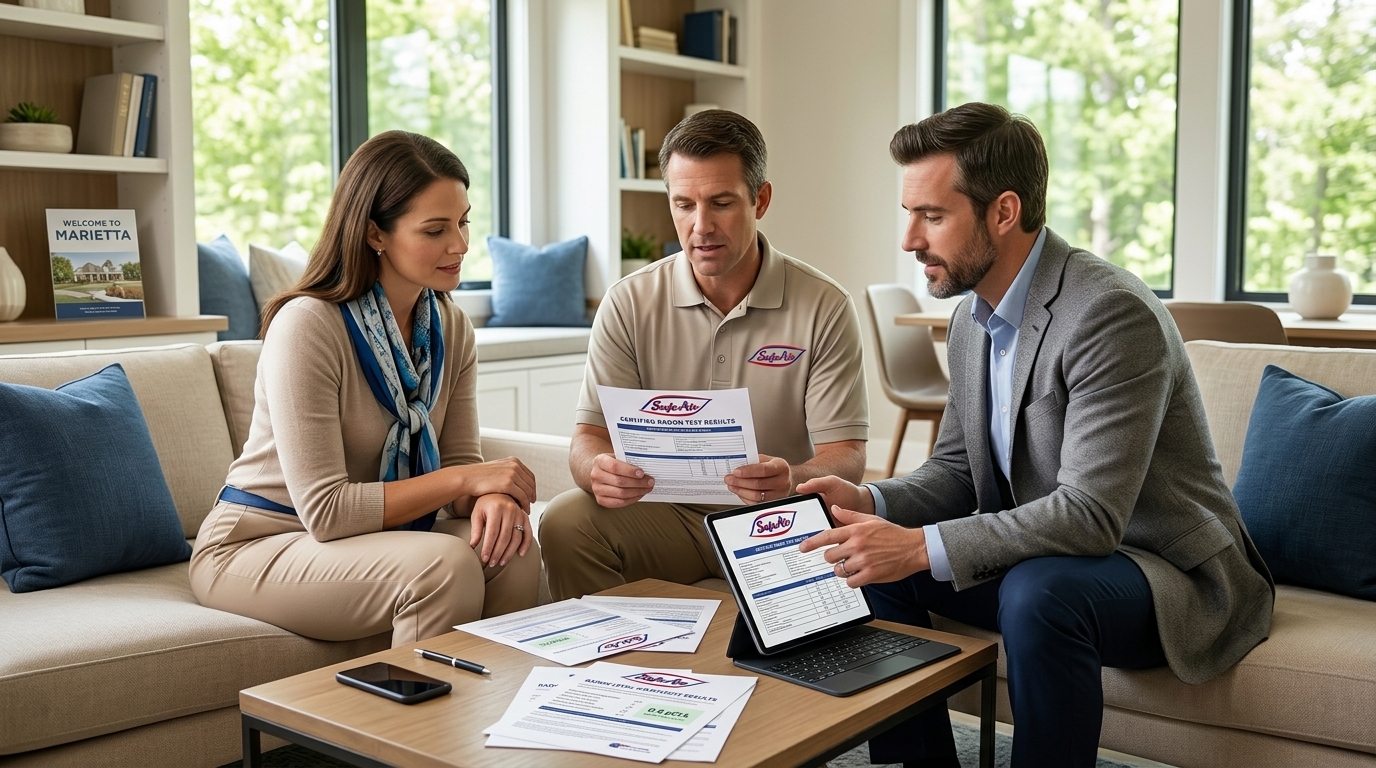
Cobb County is one of the metro Atlanta area’s most active real estate markets. Marietta, Smyrna, and East Cobb see consistent transaction volume year-round, with competitive pricing and fast-moving contingency windows. Radon comes up in Cobb County transactions, and experienced agents in the area know to recommend a test. Many listing agents pre-test to avoid surprises during due diligence.
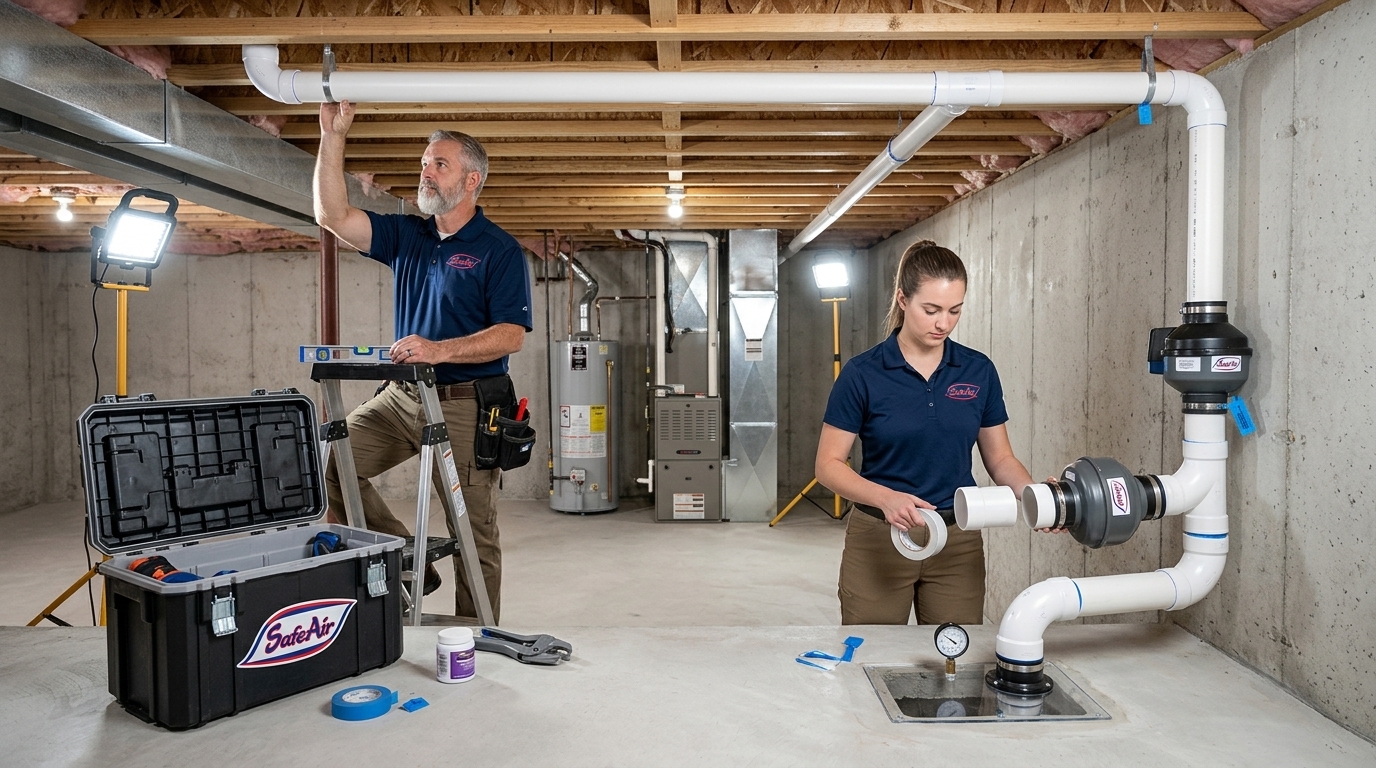
An elevated radon result in a Cobb County transaction is a negotiation item, not a deal-breaker. Mitigation in a typical Cobb County home costs between $800 and $2,500. That range is well within the scope of a standard repair request or seller credit. What makes the negotiation work is having a certified report from an independent tester, not an estimate from a company that also sells mitigation systems.
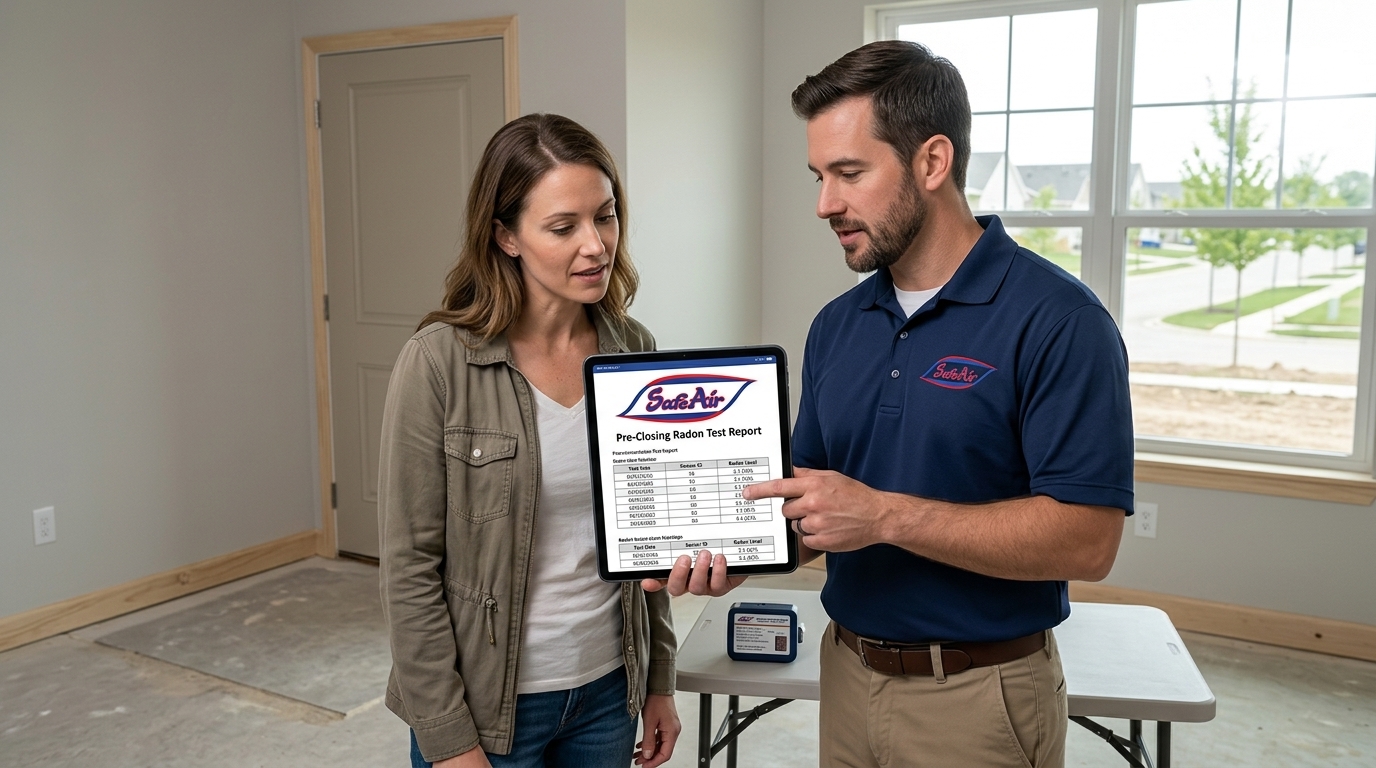
What agents need from a radon testing vendor is straightforward: fast scheduling, 48-hour results, a clean certified report, and a company that does not mitigate. SafeAir tests only. There is no mitigation conflict.
“In Cobb County, an elevated radon result with a professional certified report from an independent tester is information. That’s all it is. Information the buyer can use.”