You got your radon test result back. The number is above 4.0. Here’s what that means and what to do next.
This post covers what the EPA threshold means in practice, how to read your specific number against established guidelines, what mitigation involves at a factual level, and why the independence of your tester matters when you’re deciding what to do. No alarm. Just the information you need to move forward clearly.
What 4.0 pCi/L Actually Means
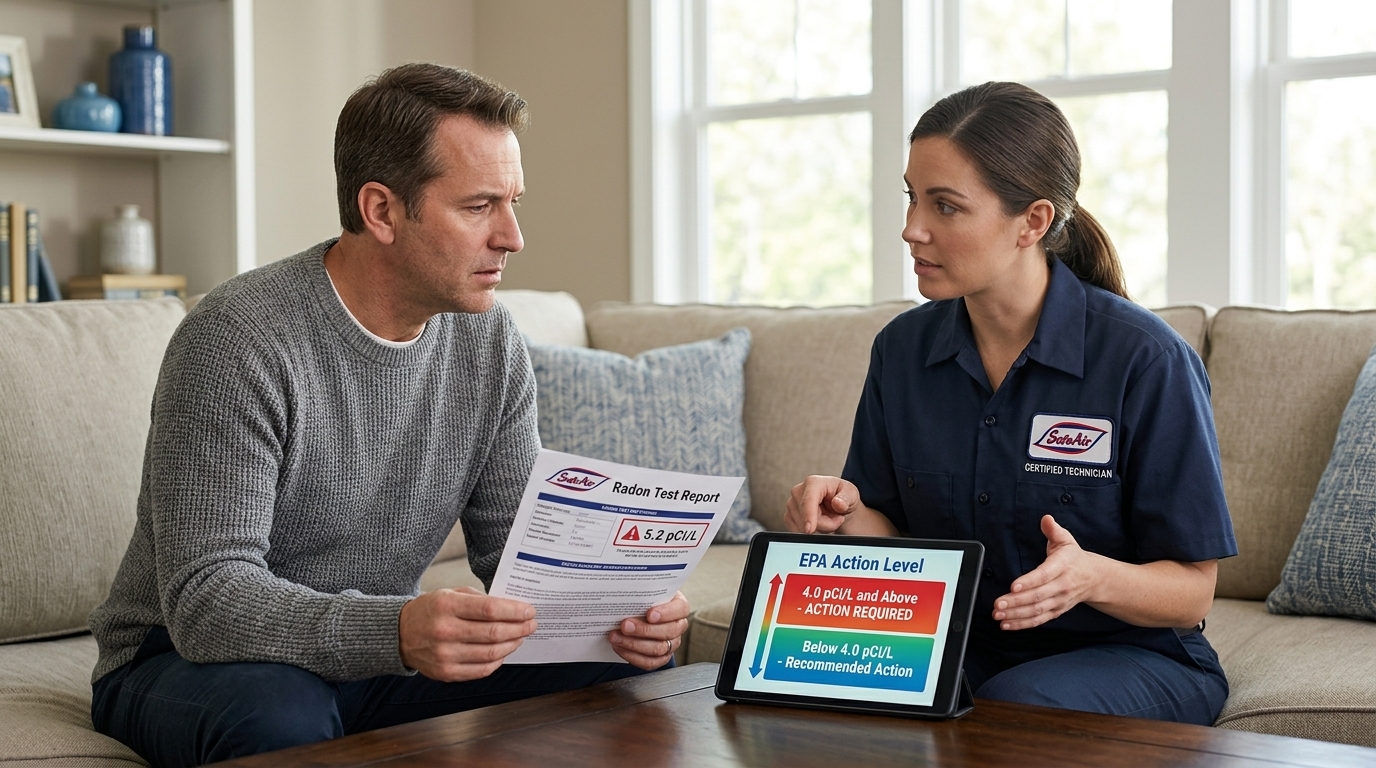
The EPA action level for radon is 4.0 pCi/L. A result at or above 4.0 pCi/L means the EPA recommends taking steps to reduce radon in your home. It is not a legal threshold. It is a health guideline based on long-term exposure risk.
pCi/L stands for picocuries per liter. It measures the rate of radioactive decay happening in each liter of air. The higher the number, the more radon decay events are occurring in the air you breathe.
The EPA recommends taking action when a result reaches 4.0 pCi/L. “Action level” does not mean the home is unsafe to occupy immediately. It means radon at that level over long-term exposure increases lung cancer risk, and mitigation is the recommended response.
The WHO sets a lower reference level of 2.7 pCi/L and notes there is no proven safe level of radon exposure. The EPA and WHO thresholds reflect two different risk frameworks. Neither is a pass/fail line.
Radon risk is a function of exposure over time, not a single event. A result above 4.0 does not mean harm has already occurred. It means the conditions in the home warrant correction.
For more context on interpreting radon levels, see our guide to acceptable radon levels and what the numbers mean.
Understanding Your Number: A Simple Reference
Use this table to see where your result falls relative to the EPA and WHO guidelines.
Result | What It Means | Recommended Action |
|---|
Below 2.0 pCi/L | Well below EPA and WHO thresholds | No action required. Retest in 2 years. |
2.0-2.7 pCi/L | Below both thresholds | No action required. Optional: retest in 2 years. |
2.7-4.0 pCi/L | Above WHO reference level, below EPA action level | EPA does not require action. Mitigation is an option worth considering. |
4.0 pCi/L or above | At or above EPA action level | EPA recommends mitigation. In real estate, this typically triggers negotiation. |
There is no level at which radon is proven to be completely harmless. The EPA and WHO thresholds are risk-based guidelines, not binary pass/fail lines. A result of 3.9 pCi/L does not mean you’re safe and 4.0 does not mean you’re in crisis.
What Mitigation Involves
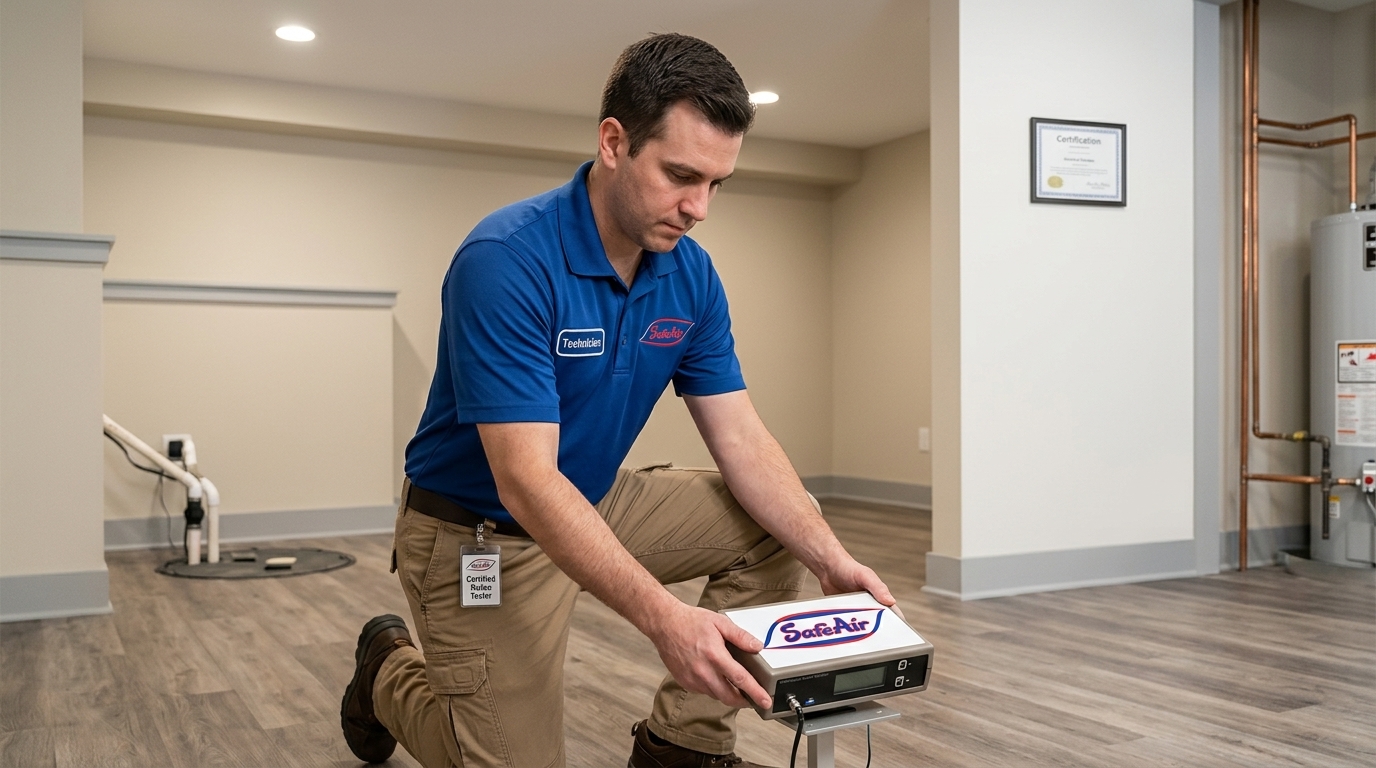
SafeAir does not perform mitigation. This section is factual background so you can make an informed decision when you speak with a contractor.
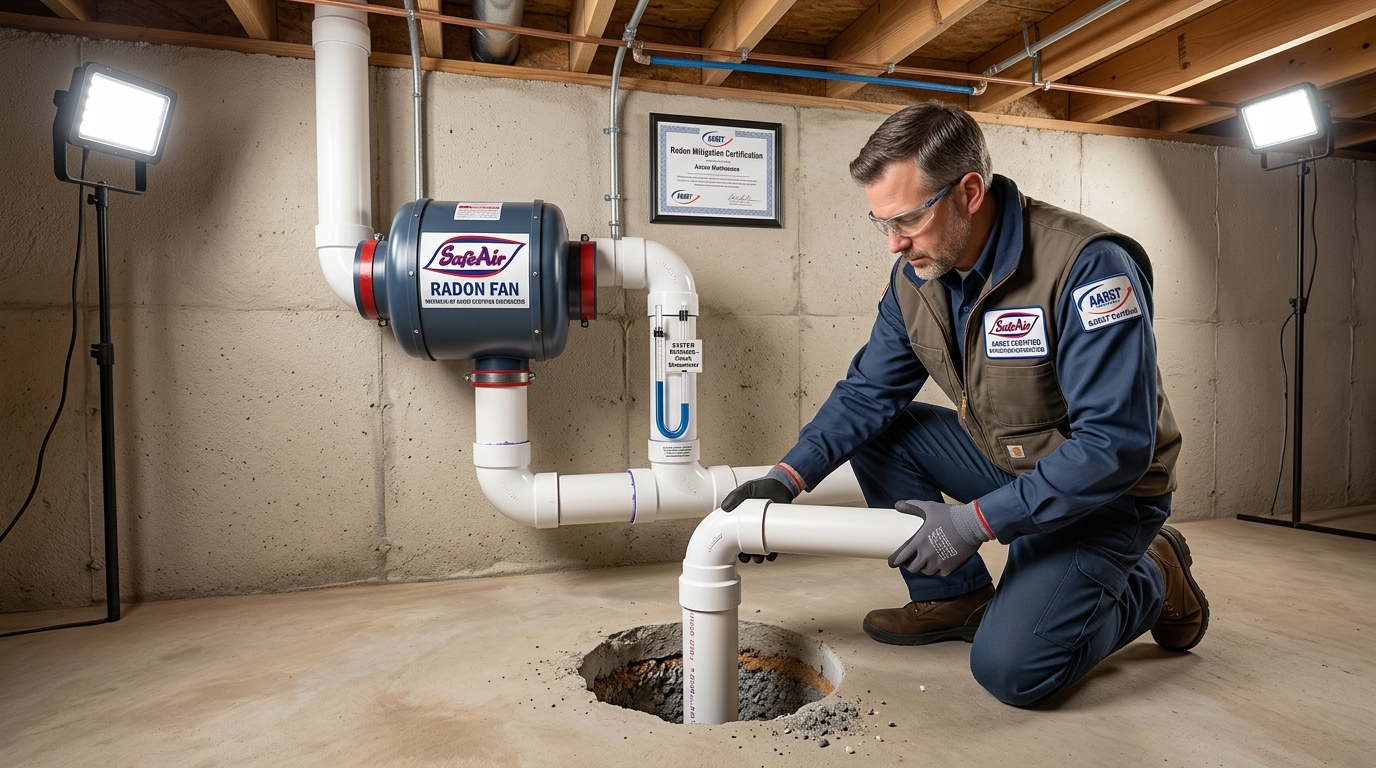
The most common residential method is sub-slab depressurization (SSD). A pipe is installed through the foundation slab and vented to the exterior, typically through the roof or a sidewall. A fan draws radon from beneath the slab and exhausts it outside before it can enter the home.
Most residential systems are installed in 4 to 8 hours. Cost in Georgia typically ranges from $800 to $2,500, depending on the home’s foundation type and the complexity of the installation. A properly installed system typically reduces radon levels by 50 to 99 percent. Most systems bring results well below 2.0 pCi/L.
Maintenance is straightforward. The fan should be checked annually. A post-mitigation verification test should be run every two years to confirm the system is still performing. You can read more about what that test involves at our post-mitigation verification page.
SafeAir provides the test result. SafeAir does not install, recommend, or refer specific mitigation contractors.
How to Choose a Radon Mitigator
When you’re selecting a mitigation contractor, the most important credential to look for is AARST-NRSB certification from the National Radon Safety Board. This indicates the contractor has met national training and competency standards for mitigation work.
Before any work begins, ask for a written estimate. Ask whether they will run a post-mitigation test after installation. Ask what the system design will look like: where the pipe exits, where the fan is located, and what the estimated noise level will be. For larger homes or more complex foundation types, get more than one estimate.
Do not use the same company that tested your home unless they are verifiably independent. Most radon companies offer both testing and mitigation. That creates a financial interest in a high result. SafeAir does not mitigate. We do not benefit from the outcome.
The company that tells you your home has a problem shouldn’t be the company that sells you the fix.
You can use the EPA’s Find a Radon Professional tool to locate certified mitigators in your area.
In a Real Estate Transaction
An elevated result in a real estate transaction is not a deal-killer. It is a data point. Mitigation typically costs $800 to $2,500, which is a manageable figure relative to most purchase prices.
Your options at the negotiation table are straightforward. You can request that the seller pay for and complete mitigation before closing. You can request a credit equal to the estimated mitigation cost. You can accept the home as-is and mitigate after purchase. All three are common and all three are reasonable depending on the timeline and the deal.
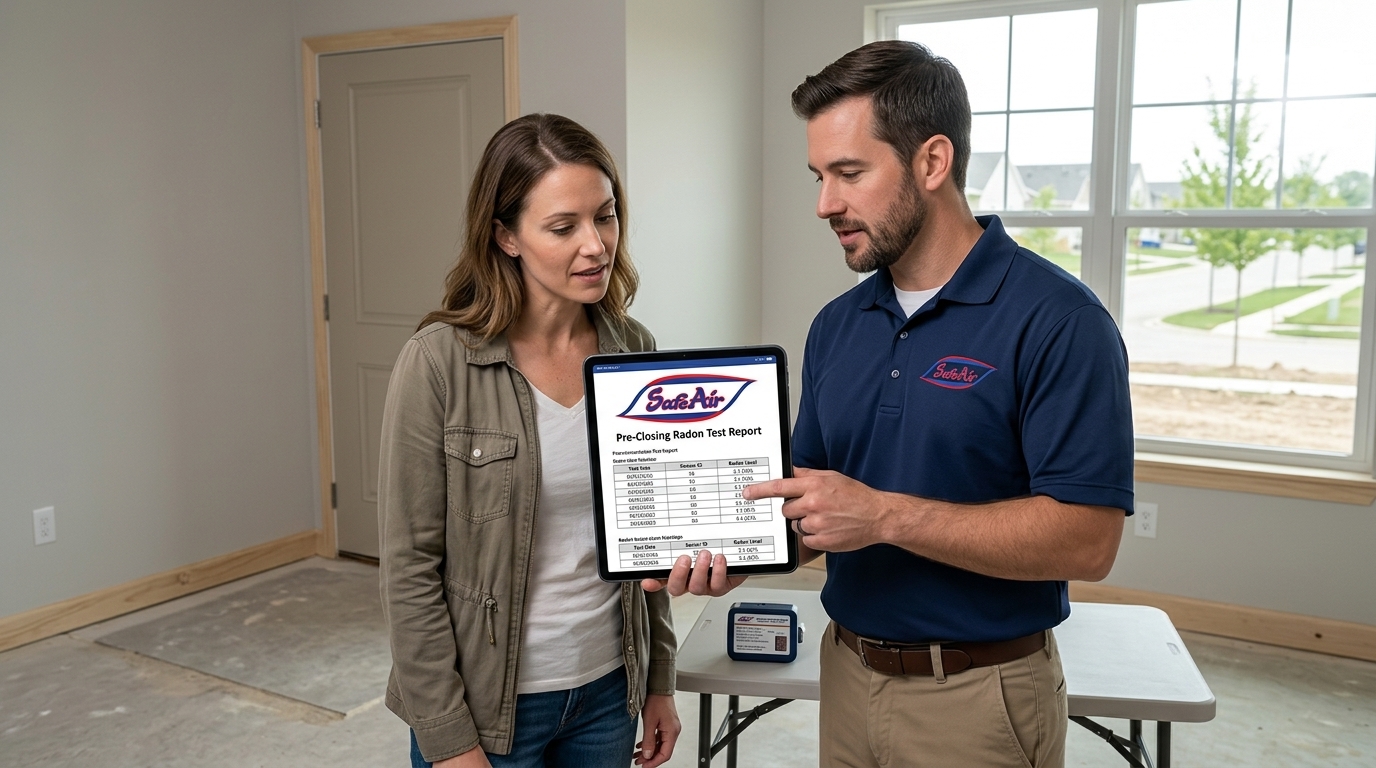
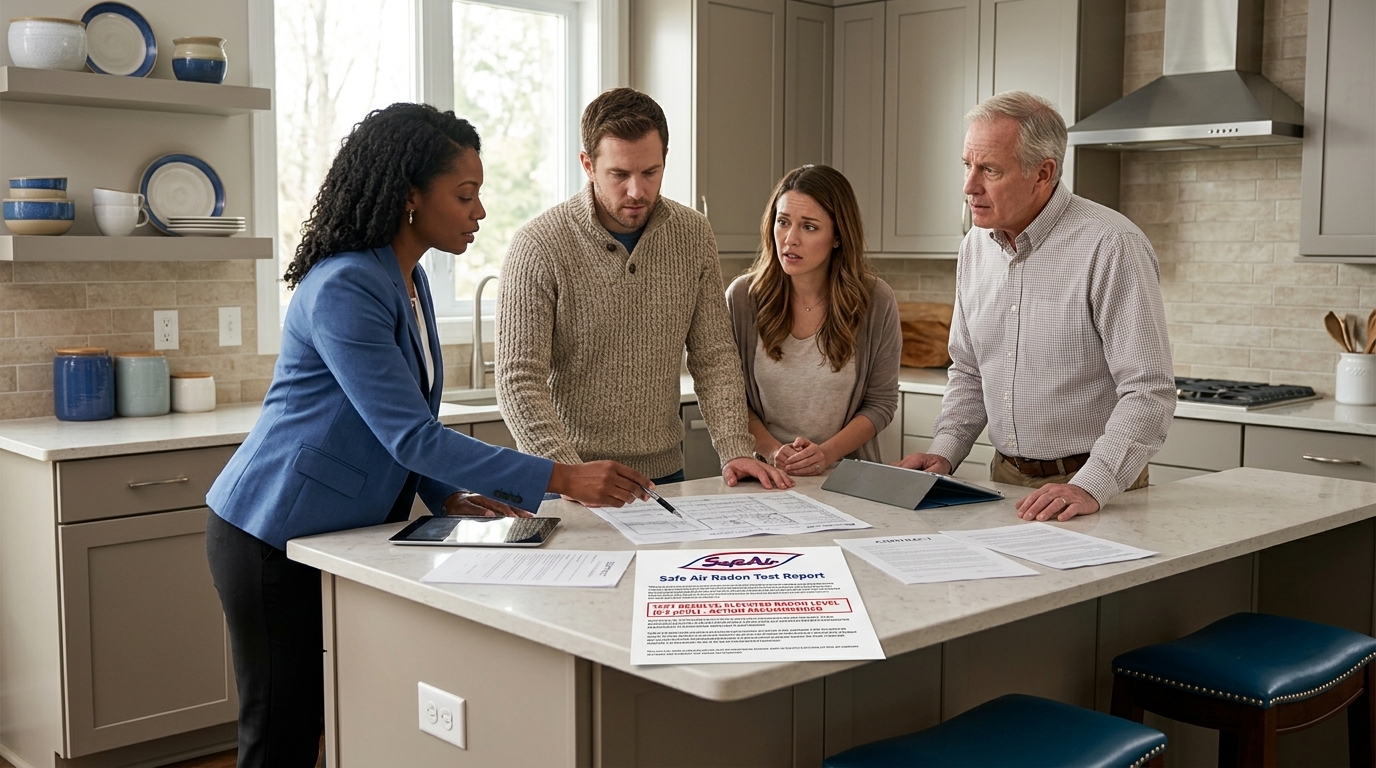
The result from SafeAir is the certified document you bring to that negotiation. There is no mitigation company’s name on it. There is no conflict of interest and no pressure attached to the number.
For a full walkthrough of how radon testing works in a transaction, see our real estate radon testing guide.
Frequently Asked Questions
What should I do immediately after getting a high radon result?
No emergency action is required. Long-term exposure creates risk, not short-term contact with elevated levels. You can increase ventilation by opening windows while you arrange next steps. Contact a certified mitigator for a written estimate. Once a system is installed, schedule a post-mitigation verification test to confirm it is working.
Can opening windows lower radon levels?
Increased ventilation temporarily reduces concentrations in the home. It is not a permanent solution. Radon returns when windows close. Sub-slab depressurization is the only reliable long-term method for most residential homes. Ventilation buys time; it does not fix the source.
Does a high radon result mean the home is unsafe to live in?
A result above 4.0 pCi/L means the EPA recommends taking action to reduce radon. It does not mean the home is immediately unsafe. Radon risk is a function of long-term exposure. Mitigation addresses the source. A post-mitigation verification test confirms the system is performing as designed.
Know Your Number. Understand What It Means.
SafeAir provides the certified result with no mitigation interest attached. What you do with the number is your call.
If you haven’t tested yet, or if you need a verification test after mitigation, schedule your inspection today.
Schedule Your Inspection
No upsell. No conflict. Just the fact.
Written by Jeremy Shelton | ACAC CIEC, ACAC CMC, IICRC