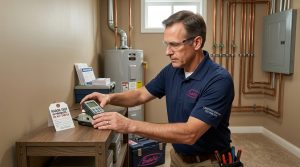
Most people put off radon testing not because they don’t want to do it. They put it off because they don’t know what it involves.
This post covers exactly what a radon test looks like from the moment you schedule to the moment you get your result. By the end, you’ll know what type of test is used, where the device goes, what you need to do during those 48 hours, and what your number means. It’s less complicated than you think.
Short-Term vs. Long-Term Tests
There are two types of radon tests, and they serve different purposes.
Short-term tests run for 48 to 96 hours. They use a charcoal canister or electret ion chamber placed inside the home. The EPA approves short-term testing for residential screening and real estate transactions. After the test period ends, the device goes to a certified lab, and results come back roughly 48 hours after the lab receives it.
Use a short-term test when:
- You’re involved in a real estate transaction
- You want an initial screening of your home
- You’re checking results after a renovation
Long-term tests run for 90 days to one year. They use an alpha track detector left in place to capture seasonal variation. This gives a more reliable operational average over time.
Use a long-term test when:
- You want a true baseline reading that accounts for seasonal changes
- You had an elevated short-term result and want to confirm before committing to mitigation
- Your mitigation contractor needs it for system design
Long-term tests are not appropriate for real estate transactions.
SafeAir provides short-term certified testing for residential and real estate uses.
For most homeowners and all real estate transactions: a 48-hour short-term test is the right choice.
Where Does the Test Device Go?
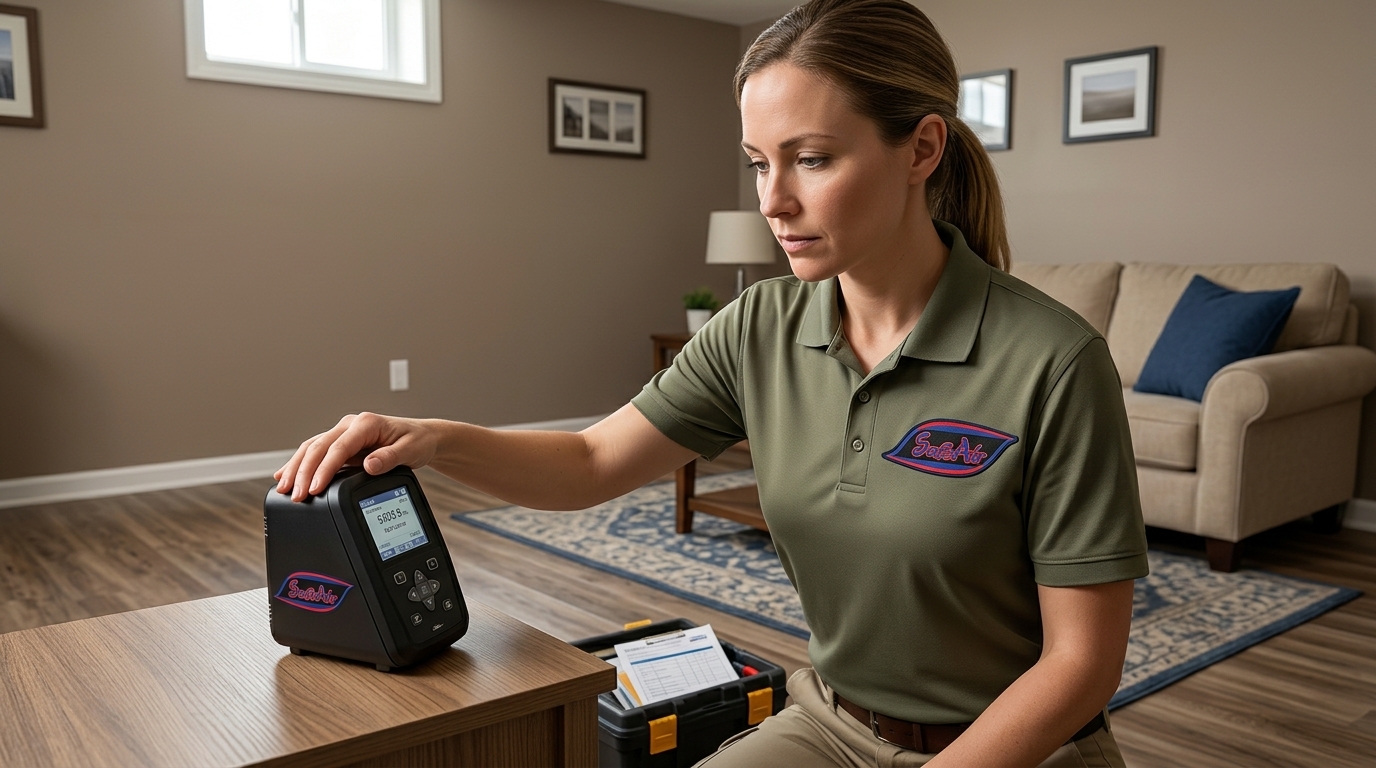
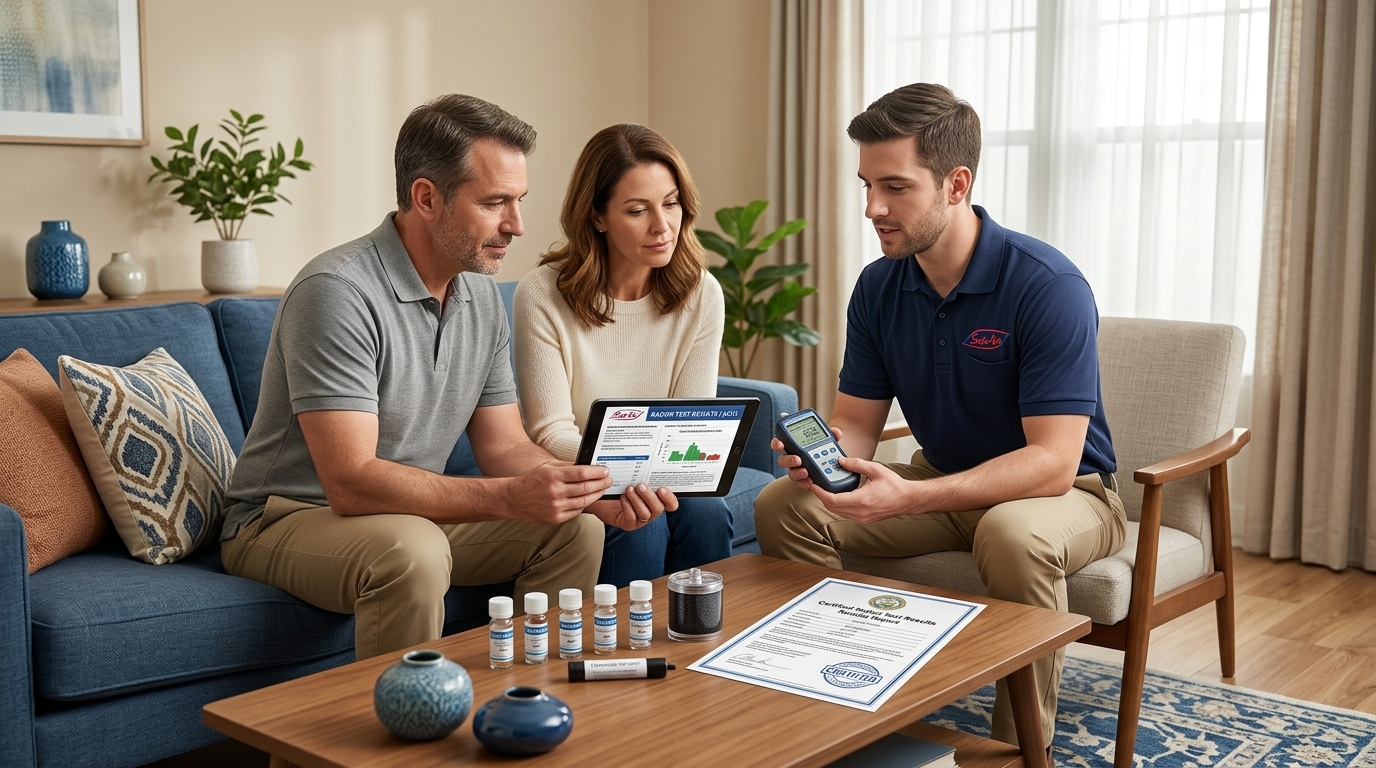
Placement matters. The device goes at the lowest livable level of the home, meaning the lowest level where people actually spend time.
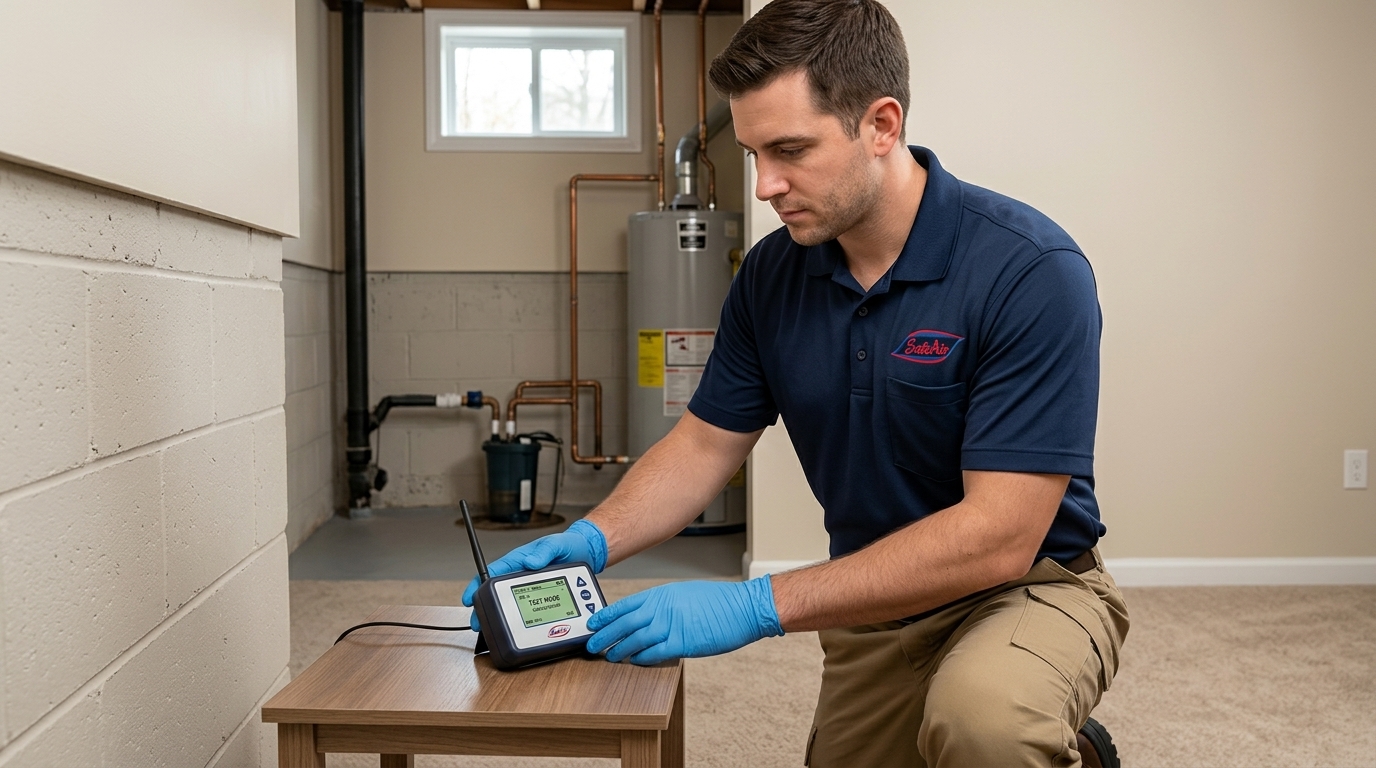
- Finished basement: the device is placed at the basement level, since that’s where radon concentrations are typically highest and where occupants spend time.
- Slab-on-grade home (no basement): the device goes on the main living floor.
- Crawlspace home: the device goes on the main floor, since the crawlspace itself is not lived in.
- Multi-story homes: may require devices on more than one level depending on the layout and use of each floor.
The device should be placed in a room where normal living happens, a bedroom, family room, or living area. Bathrooms, closets, and utility rooms are not appropriate locations.
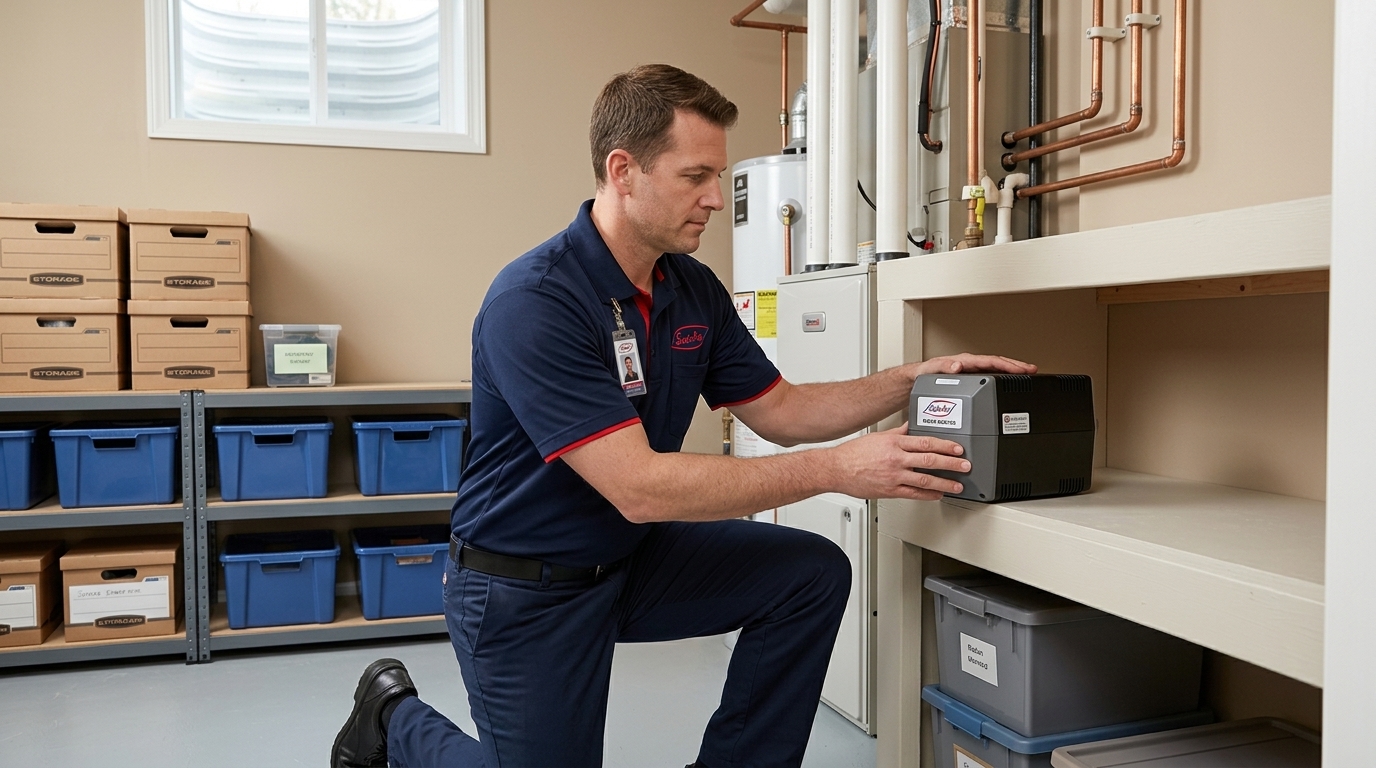
Placement height matters too. The device should sit at least 20 inches above the floor and away from exterior walls, windows, sump pits, and any source of drafts.
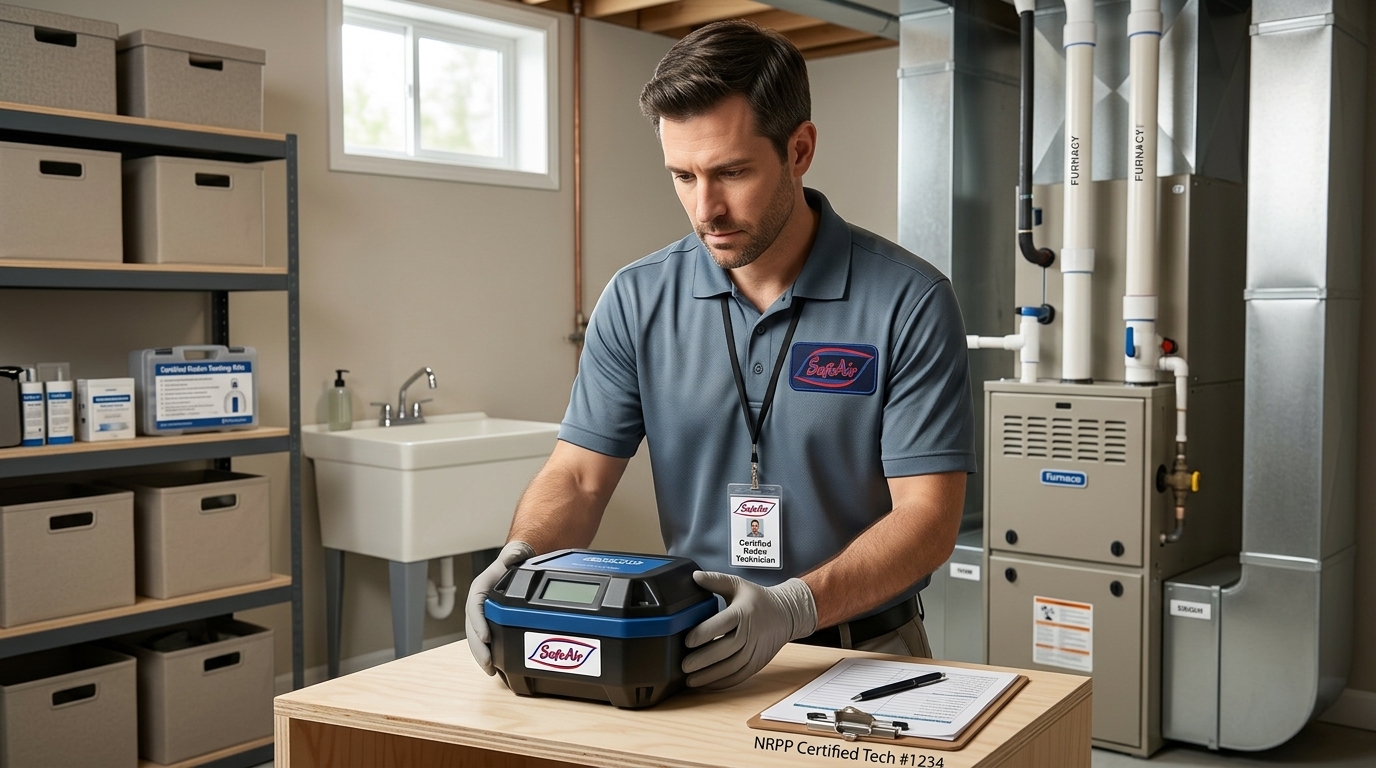
SafeAir places all devices for a certified test. This is not something the homeowner handles.
What Are Closed-House Conditions?
Closed-house conditions mean keeping windows and exterior doors closed as much as possible during the test period and for 12 hours before it begins. Normal HVAC operation continues. Normal entry and exit through doors is fine.
Here’s what that looks like in practice:
- Windows stay closed during the test and for at least 12 hours before the device is placed.
- You can go in and out through doors normally.
- Your heating and cooling system should run as usual. Do not turn off the HVAC during a radon test.
- Fireplace dampers should be closed unless you’re actively using the fireplace.
- Do not run whole-house fans or attic fans during the test period.
The reason for closed-house conditions is straightforward. Outdoor air dilutes radon. Closed-house conditions approximate normal living conditions and give a result that reflects what your home’s air actually contains during regular use. If windows are left open, the result may understate your actual exposure.
Brief openings for a few minutes are unlikely to affect the result in a meaningful way. Extended open windows during the test period are a different matter. If that happens, contact SafeAir.
For more on the timeline involved, see how long a radon test takes.
What Happens During the 48 Hours
Normal life. That’s it.
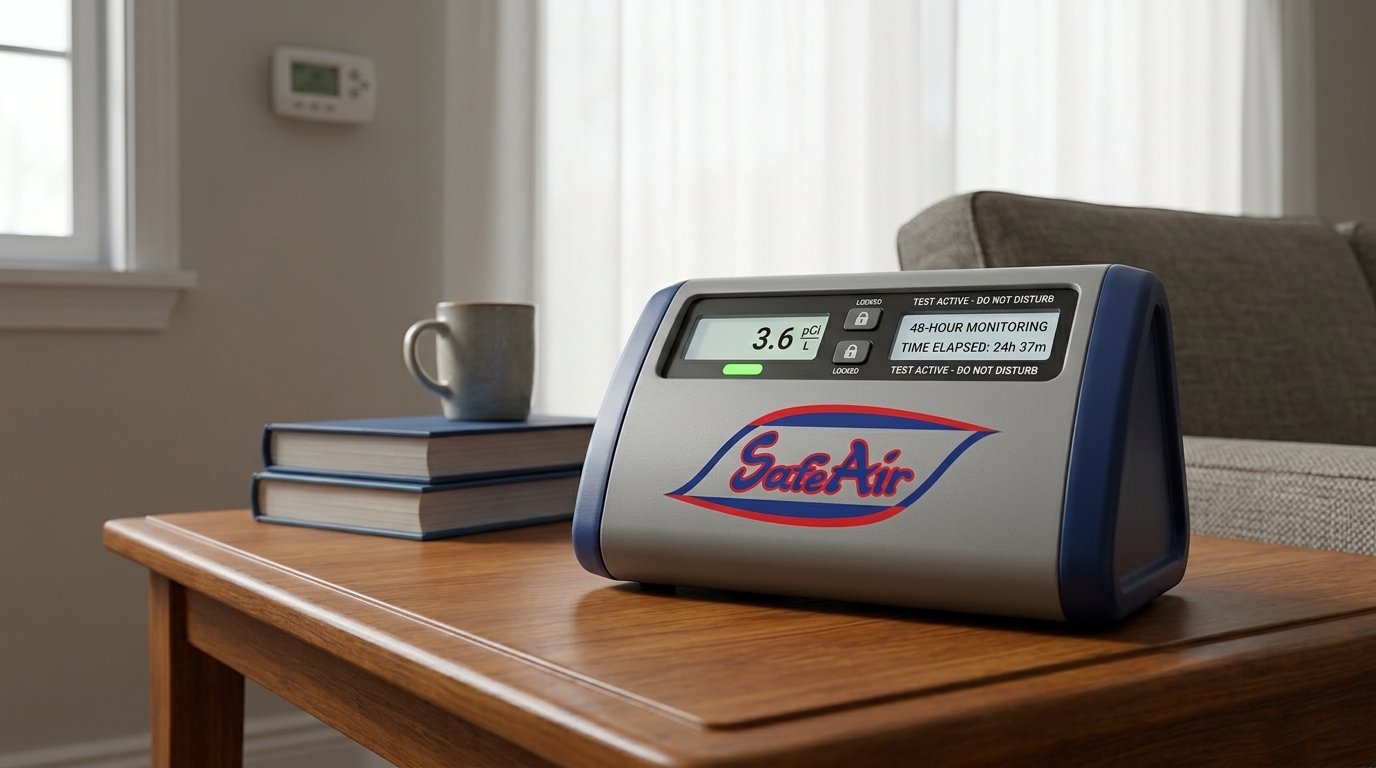
The device sits in the designated location and does its job while you go about your routine. You can cook, clean, sleep, have guests over, and use every room in the house. The test does not require you to change how you live.
A few things to avoid:
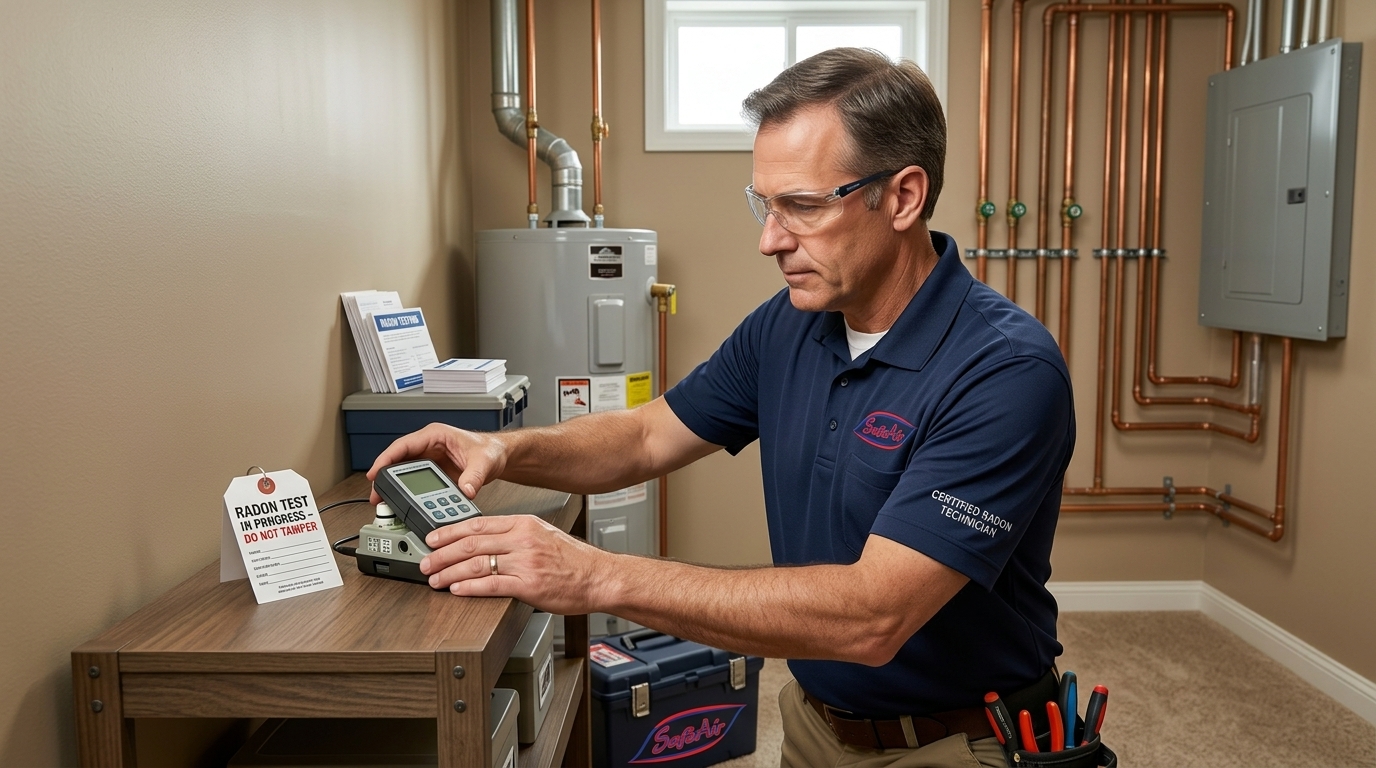
- Do not move the device. Leave it exactly where SafeAir placed it.
- Do not put fans or air purifiers near the device.
- Avoid vacuuming or disturbing the area around the device more than necessary.
- Keep pets and children away from the device so it doesn’t get knocked over or moved.
If anything does happen to the device during the 48-hour period, contact SafeAir right away. If the device was moved or a window was left open for an extended time, the test can be restarted. One interrupted test is not the end of the process.
After the Test: Lab Analysis and Your Result
SafeAir retrieves the device after the 48-hour period ends. It goes directly to an accredited laboratory. That chain of custody from placement to lab is what makes the result certified.
Lab turnaround is approximately 48 hours from the time the lab receives the device. So from test completion to your result, you’re looking at roughly two days.
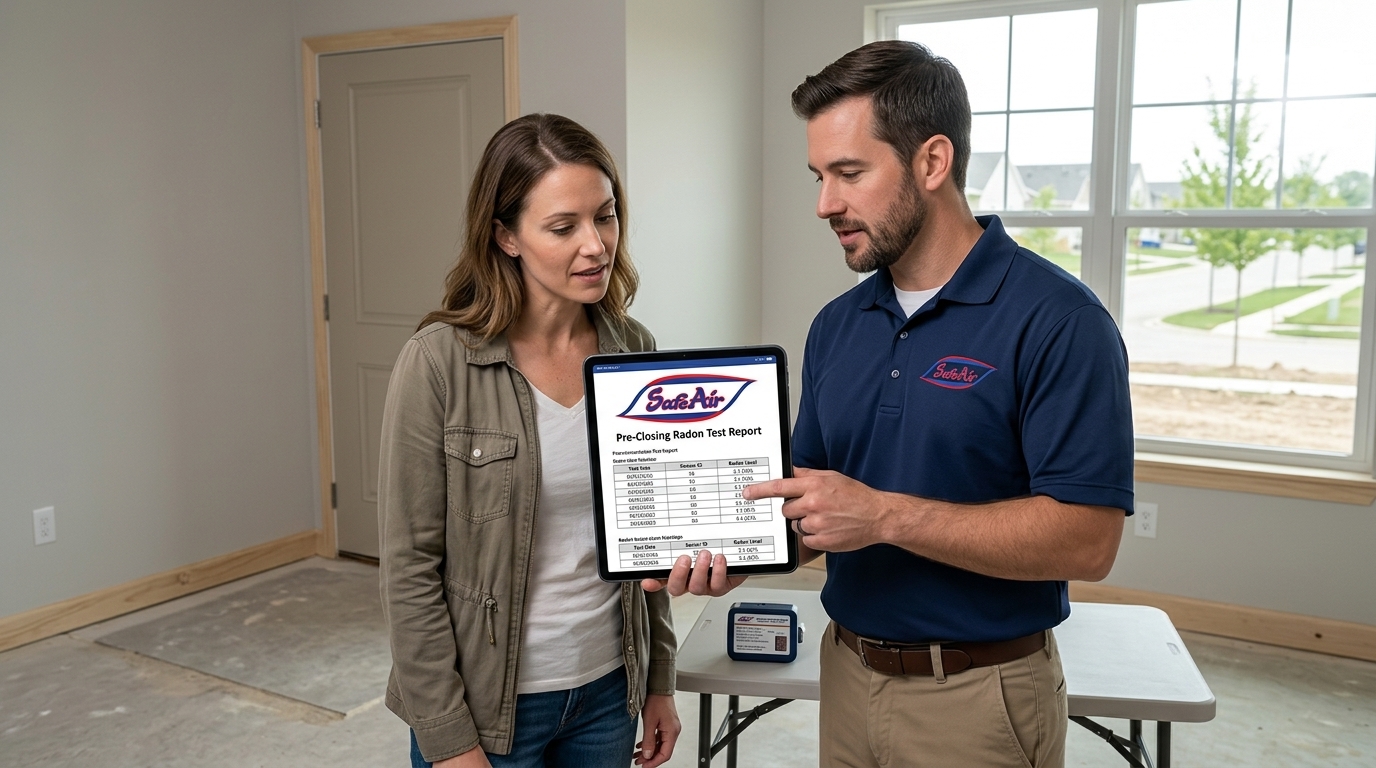
Your result comes back as a certified written report stating the radon level in your home in picocuries per liter (pCi/L).
Here’s what the number means according to EPA guidance:
- Under 4.0 pCi/L: no action required
- At or above 4.0 pCi/L: the EPA recommends mitigation
SafeAir delivers the result to you directly. If you have questions about what your number means or what to do next, Jeremy can walk you through it.
For a full explanation of what different radon levels indicate, see Radon Levels: What the Numbers Actually Mean. You can also review the EPA’s guidance on radon testing for additional context.
Professional Certified Test vs. DIY Kit
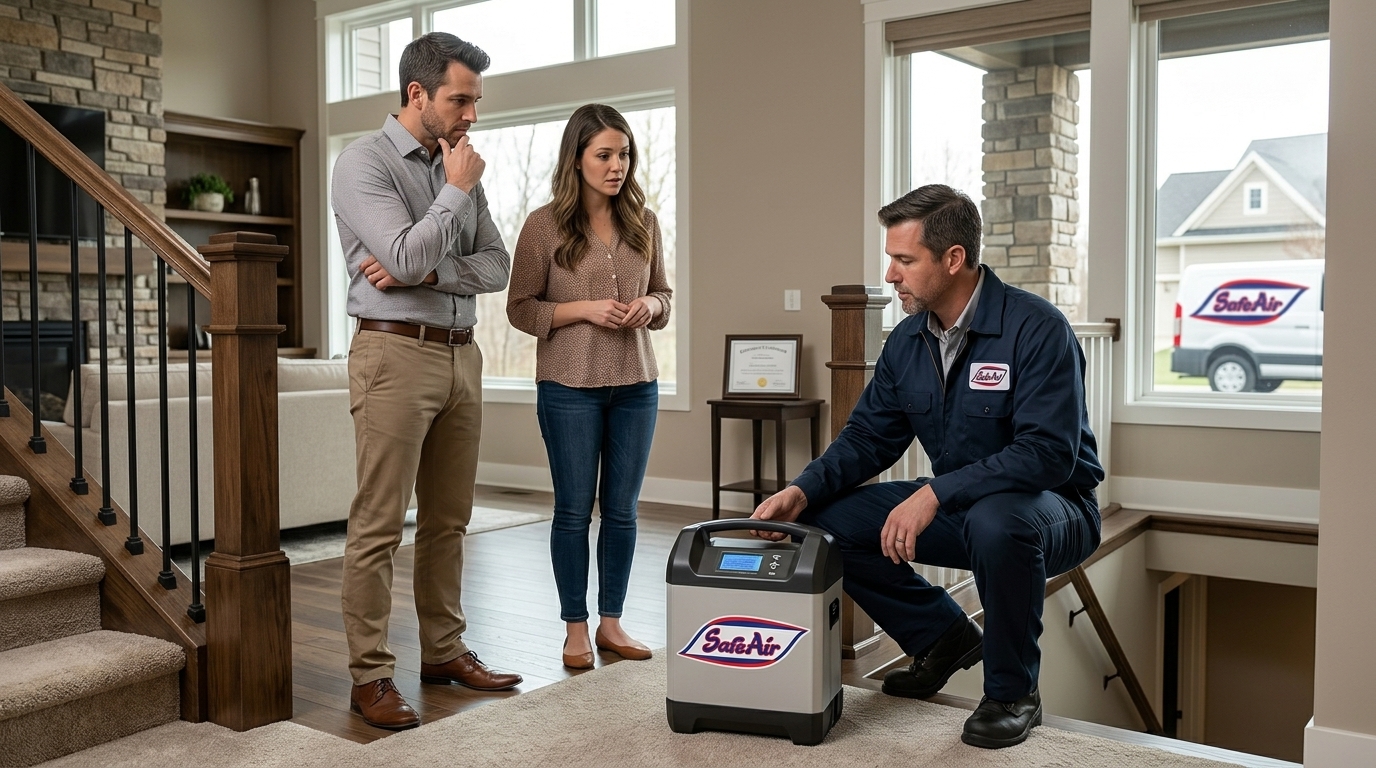
A DIY charcoal canister kit from a hardware store uses the same basic technology as a professional short-term test. The reading itself can be accurate. What it does not provide is a certified chain of custody.
When you place the device yourself, there is no documentation of who placed it, where it was placed, or what conditions were maintained during the test. The result is real, but it is not a certified document that another party can use.
Use a DIY kit when: you live in the home, you have no plans to sell, and you just want a general idea of whether radon is present.
Use a certified professional test when: a real estate transaction is involved, a mitigation contractor needs a baseline, you’re documenting for insurance or legal purposes, or any situation where someone other than you needs to use the result.
“If you only need to know for yourself: a DIY kit works. If someone else needs to use the result: you need a certified professional test.”
For real estate-specific guidance, see SafeAir’s real estate radon testing page. The EPA Citizens Guide to Radon is also a useful reference for understanding your options.
Frequently Asked Questions
Do I have to be home during the radon test?
No. SafeAir schedules device placement and retrieval separately. You don’t need to be present during the 48-hour test period itself. You do need to make sure closed-house conditions are maintained while the device is in place. That means keeping windows closed and not running whole-house fans, but it doesn’t require you to stay home.
Can I run my air conditioner during a radon test?
Yes. Your HVAC system, including central air conditioning, should operate normally during the test. Closed-house conditions restrict air exchange with the outside. What that means in practice is no open windows, no whole-house fans, and no open exterior doors for extended periods. Your air conditioner recirculates indoor air and does not affect test conditions.
What happens if I accidentally open a window during the test?
A brief opening of a few minutes is unlikely to significantly affect the result. An extended period of open windows is a different situation and should be reported to SafeAir. Depending on how long the windows were open and how much outdoor airflow was introduced, the test may need to be restarted. One restart is not a problem.
For more detail on how often to test and when retesting makes sense, see the homeowner’s guide to radon retesting.
Ready to Schedule?
The process takes 48 hours. The result takes another 48 hours. And then you know.
SafeAir has tested hundreds of Georgia homes since 2009. We serve Atlanta, Marietta, and communities throughout the region. View all SafeAir service areas.
Schedule Your Inspection
No obligation. No upsell. Just the number.
Written by Jeremy Shelton | ACAC CIEC, ACAC CMC, IICRC SafeAir Radon Testing