Your radon test came back. The number is in front of you. Now what?
This post explains exactly how to read that number. We cover the EPA action level, the WHO reference level, what different readings mean in practice, and what to do at each threshold. If you got a result from a short-term or long-term test, or from a real estate inspection, here is how to read the number.
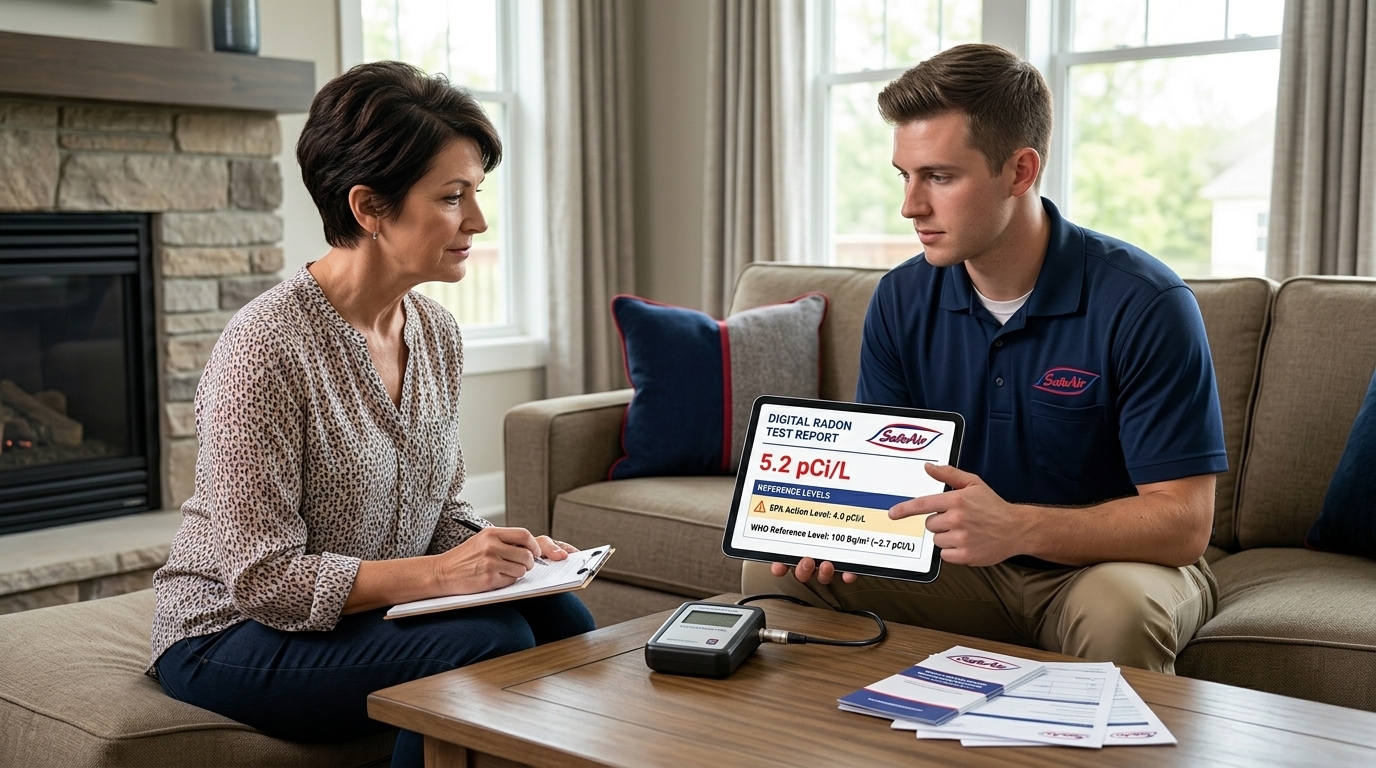
The EPA Action Level: 4.0 pCi/L
The EPA action level for radon is 4.0 pCi/L. At or above this level, the EPA recommends taking steps to reduce radon in your home. This is a health guideline, not a legal threshold. A result above 4.0 means action is recommended, not that your home is immediately unsafe.
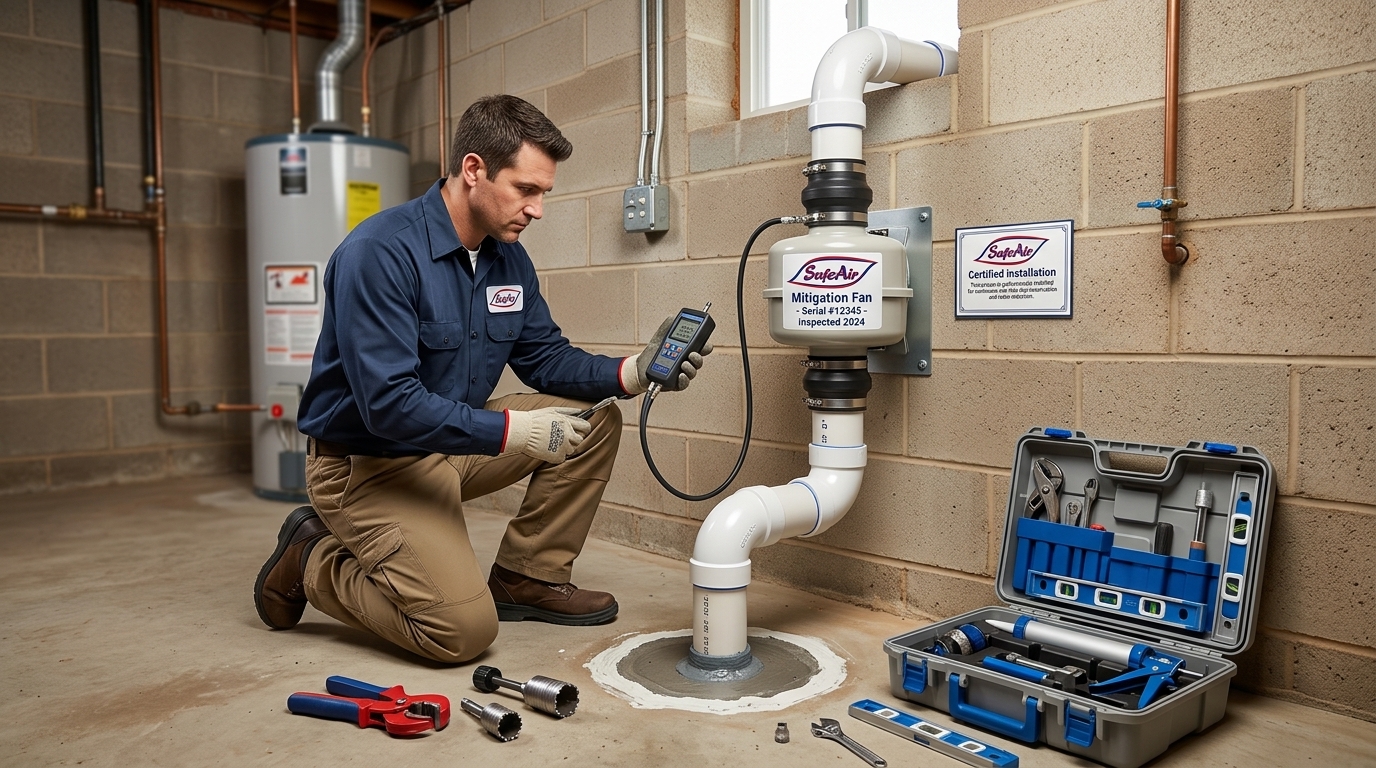
“Action level” is the EPA’s term for the concentration at which the health benefits of mitigation are clear enough to justify the cost of a mitigation system. The standard fix is sub-slab depressurization: a pipe and fan system that pulls radon from beneath the foundation and exhausts it outside before it enters your living space.
The 4.0 pCi/L threshold comes from a risk-benefit analysis. The EPA weighed the long-term lung cancer risk from radon exposure against the cost and feasibility of mitigation across the US housing stock. At 4.0 pCi/L, mitigation is both recommended and practical.
One thing to be clear about: 4.0 pCi/L is not a dividing line between a problem home and a problem-free one. It is the level at which taking action is clearly called for. Radon exposure below that threshold still carries some degree of risk. It just falls below the EPA’s threshold for recommending action.
The WHO Reference Level: 2.7 pCi/L
The World Health Organization sets a lower reference level of 2.7 pCi/L, which equals 100 Bq/m3 in the metric unit used internationally. The WHO notes there is no proven level at which radon exposure carries zero risk.
The gap between EPA and WHO guidance reflects different approaches to the same data. The WHO uses a more conservative risk threshold. The EPA balances health risk against practical achievability across the existing US housing stock. Neither organization says radon below their threshold is risk-free.
If your result falls between 2.7 and 4.0 pCi/L, the EPA does not recommend mitigation. Some health professionals, however, consider mitigation worth discussing at levels above the WHO reference.
Whether to act below 4.0 pCi/L is a personal decision. Relevant factors include how long you have lived in the home, how long you plan to stay, and your individual risk tolerance. Your certified inspector can walk you through the numbers specific to your situation.
A Practical Guide to Your Result
Use this table to match your result to a recommended course of action.
Your Result | What It Means | Recommended Action |
|---|
Below 2.0 pCi/L | Well below both EPA and WHO thresholds | No action required. Retest every 2 years. |
2.0 to 2.7 pCi/L | Below both thresholds | No action required. Optional: retest in 2 years. |
2.7 to 4.0 pCi/L | Above WHO reference level, below EPA action level | No EPA-recommended action. Some homeowners choose to mitigate. Personal decision. |
4.0 to 8.0 pCi/L | At or above EPA action level | EPA recommends mitigation. Contact a certified radon mitigator. |
Above 8.0 pCi/L | Significantly elevated | EPA recommends mitigation within months. Contact a certified mitigator promptly. |
There is no level at which radon is proven to be completely harmless. The EPA and WHO thresholds are risk-based guidelines, not binary pass/fail lines.
For the “within months” recommendation at very high levels, see: EPA.gov/radon
If you received a high result and want more context before deciding on next steps, read: What Does a High Radon Reading Mean?
What “pCi/L” Actually Means
pCi/L stands for picocuries per liter. It is a measurement of radioactive decay events per liter of air. Specifically, it measures how much radon gas is present in the air you are breathing.
You do not need to understand the physics to use the number. The higher the pCi/L reading, the higher the concentration of radon in your home’s air, and the higher the long-term exposure risk.
For practical purposes: 4.0 is the EPA’s line. Below it, no action is required. At or above it, act. That is the core of what the number tells you.
In a Real Estate Transaction
If you received a radon result as part of a home purchase or sale, the thresholds above still apply. But there are a few additional considerations.
A result below 4.0 pCi/L typically does not trigger radon-related negotiation. Some buyers request a credit when a result falls between 2.7 and 4.0 pCi/L. This is negotiated case by case and is not standard practice.
A result at or above 4.0 pCi/L usually means the buyer requests seller-paid mitigation or a closing credit equal to mitigation cost. In Georgia, mitigation costs typically fall in the $800 to $2,500 range depending on the home’s foundation type and complexity. A result significantly above 4.0, such as 8.0 pCi/L or higher, follows the same process. The number is higher, but mitigation still works. It does not make a home unsellable.
For a full breakdown of how radon fits into a real estate transaction, see: Real Estate Radon Testing Guide
Frequently Asked Questions
What is a level considered acceptable for radon in a home?
There is no radon level proven completely free of risk. The EPA recommends taking action at 4.0 pCi/L or above. The WHO uses a lower reference level of 2.7 pCi/L. Most mitigation systems, when properly installed, reduce indoor radon to below 2.0 pCi/L. For more on what a reading means in practice, see the American Cancer Society’s radon resource
Is 3 pCi/L of radon a concern?
A level of 3.0 pCi/L is below the EPA action level of 4.0 but above the WHO reference level of 2.7. The EPA does not recommend mitigation at this level. The WHO notes that any radon exposure carries some degree of risk. Whether to mitigate below 4.0 pCi/L is a personal decision based on length of occupancy and individual risk tolerance. A certified inspector can help you think through it.
What is the average radon level in American homes?
According to the EPA, the average indoor radon level in homes across the United States is approximately 1.3 pCi/L. The average outdoor radon level is approximately 0.4 pCi/L. Most homes that exceed the 4.0 pCi/L action level can be brought below 2.0 pCi/L with a properly installed mitigation system. Source: EPA.gov/radon
Ready to Know Your Number?
Understanding the thresholds is step one. Getting your certified result is step two.
SafeAir provides certified radon testing across metro Atlanta and North Georgia. Results are delivered within 48 to 72 hours.
Schedule Your Inspection
No mitigation sales pitch. Just the fact.
Related reading:
Jeremy Shelton | ACAC CIEC, ACAC CMC, IICRC SafeAir Radon Testing